2026 Top Outdoor Substation Types for Global Buyers?
The 2026 market for Outdoor Substations is becoming more specialized. Global buyers now compare more than voltage ratings and purchase prices. They examine climate exposure, grid stability, maintenance access, land availability, and future expansion. A substation beside a coastal port faces salt mist, wind, and corrosion. A desert installation faces dust, intense heat, and limited water. These details can change the best design.
John D. McDonald, an IEEE power-system specialist and recognized substation authority, has described the substation as “the heart of the power system.” That view remains practical in 2026. Air-insulated substations offer visible equipment and easier fault inspection. Gas-insulated substations save space and protect critical components in dense or polluted locations. Hybrid substations combine both approaches. Mobile substations can support temporary capacity, emergency restoration, or planned maintenance.
Yet, no type wins everywhere. That is the difficult part. Buyers must evaluate total lifecycle cost, not only the initial quotation. IEC 62271 compliance, local grid codes, seismic conditions, protection systems, and spare-parts availability require close review. Digital monitoring can improve reliability, but it also introduces cybersecurity and training demands. Sometimes, simpler equipment performs better because local teams understand it thoroughly.
This guide examines the leading Outdoor Substations types for global buyers in 2026. It connects engineering choices with real procurement conditions. Readers will find practical comparisons, application examples, and selection risks. The right answer may be less impressive than expected. It should still work reliably, safely, and economically for decades.
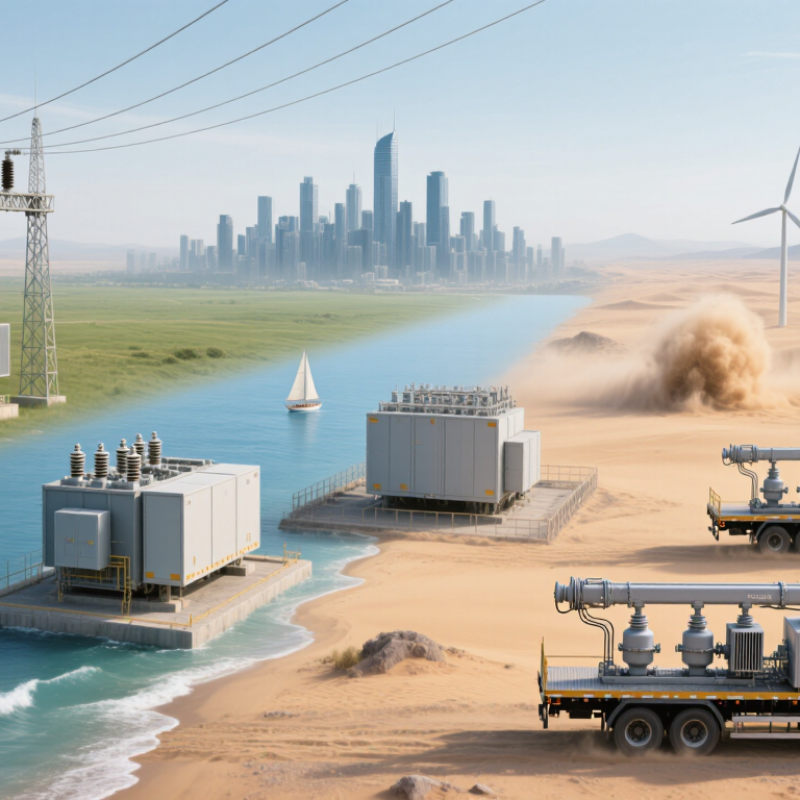
Outdoor Substation Basics and Their Role in Modern Power Networks
Outdoor Substation Basics and Their Role in Modern Power Networks
An outdoor substation changes voltage, controls power flow, and isolates faults before they spread. It connects generation, transmission, and local distribution through transformers, busbars, breakers, and protection systems. Air-insulated substations remain common because they offer simpler inspection and easier equipment replacement. Space matters. Gas-insulated designs need less land, but they demand stricter installation control and specialized maintenance. Hybrid layouts can balance both approaches where expansion space is limited.
The choice should follow voltage level, climate, land cost, safety distances, and future load growth. The IEA Electricity 2024 report expects global electricity demand to grow by about 3.4% annually through 2026. Renewable Capacity Statistics 2025 from IRENA recorded 585 GW of renewable capacity additions during 2024. These figures increase pressure on substations to manage variable generation and two-way power flows. Digital protection, remote monitoring, and dynamic voltage control are becoming practical requirements, not optional upgrades. IEC 61936-1 also guides high-voltage installation safety and design. Yet, digital equipment can create new maintenance risks. A failed communication link may delay an otherwise correct protection action. Buyers should therefore request tested cybersecurity controls, clear maintenance access, and verified environmental ratings. Dust, salt spray, flooding, and extreme heat can quietly shorten equipment life. There is no universal “top” substation type. A technically elegant design may still fail commercially when local skills, spare parts, or grid expansion plans are overlooked.
Air-Insulated Substations: Design, Benefits, and Typical Applications
Air-insulated substations (AIS) use surrounding air as the main insulation medium between energized equipment and earth. Their outdoor design typically includes busbars, circuit breakers, disconnectors, current transformers, voltage transformers, and surge arresters. Engineers set clearances according to voltage, altitude, pollution level, and switching conditions. The layout also provides safe access for inspection and maintenance. It looks simple. But it is not.
AIS can reduce initial equipment costs and simplify visual fault identification. Large outdoor yards also allow future feeder extensions, which helps utilities manage changing demand. Maintenance teams can inspect conductors, insulators, and connection points without opening sealed gas compartments. Field experience shows that drainage, gravel quality, and cable trench design strongly affect long-term reliability. These details are easy to underestimate. Land use remains a major limitation, especially near cities. Dust, humidity, salt, and ice can increase surface leakage. Correct creepage distances and regular cleaning schedules are essential.
AIS is common in rural transmission networks, industrial power systems, renewable-energy collection sites, and utility distribution stations. At high voltage, carefully positioned steel structures maintain phase-to-phase and phase-to-ground distances. A robust grounding grid controls touch and step voltages during faults. Protective relays, communication systems, and condition monitoring improve operational response. However, automation cannot repair poor civil work or neglected inspections. Designers should assess climate data, maintenance skills, transport access, and expansion plans before selecting AIS. A cheaper layout may become expensive when land, outages, or contamination problems are considered. That assumption needs challenging.
Gas-Insulated Substations: Compact Solutions for Space-Limited Sites
Gas-insulated substations are becoming a practical choice for outdoor projects with limited land, dense cities, and difficult terrain. Unlike air-insulated substations, GIS places switching equipment inside sealed metal enclosures filled with insulating gas. This arrangement sharply reduces clearance requirements. CIGRE technical literature reports that GIS can reduce substation land use by roughly 70–90% compared with conventional AIS designs, depending on voltage level and layout.
The space advantage is significant. A GIS bay can fit beside a road, under a transmission corridor, or near an industrial plant. It also protects conductors from dust, salt, humidity, and many weather effects. However, compact does not mean simple. Installation needs strict cleanliness control, accurate gas handling, and trained commissioning teams. IEC 62271-203 provides the key framework for high-voltage gas-insulated switchgear. The IPCC’s Sixth Assessment Report gives sulfur hexafluoride a 100-year global warming potential of 25,200, so leakage monitoring matters.
Market evidence supports continued demand. A 2024 MarketsandMarkets assessment valued the global gas-insulated switchgear market at more than USD 20 billion, with growth linked to urbanization and grid expansion. Yet forecasts vary. Buyers should not treat them as guaranteed outcomes. Procurement teams need to compare lifecycle cost, outage access, spare-part logistics, seismic design, and end-of-life gas recovery. In coastal regions, a sealed enclosure may outperform AIS, but poor maintenance planning can still create expensive downtime. A smaller footprint is useful. It is not the whole decision.
2026 Outdoor Substation Types: Typical Footprint at 132 kV
Gas-insulated substations provide a compact solution for space-limited sites. The comparison below shows representative land requirements for typical 132 kV layouts; actual footprints vary with transformer capacity, redundancy, safety clearances, and local regulations.
Indicative engineering values: GIS approximately 0.5–1.5 ha, hybrid substations approximately 1.5–3.0 ha, and AIS approximately 2.5–5.0 ha for comparable 132 kV installations.
Hybrid and Mobile Substations for Flexible Grid Development
2026 Top Outdoor Substation Types for Global Buyers?
Hybrid and Mobile Substations for Flexible Grid Development
Hybrid and mobile substations are becoming practical tools for uncertain grid conditions. The IEA’s Electricity 2024 report forecasts global electricity demand growth of 3.3% in 2024 and 3.7% in 2025. Renewable projects, industrial loads, and temporary construction sites all require faster connection solutions. A hybrid outdoor substation can combine fixed equipment with mobile transformers, switchgear, and protection systems. This arrangement supports staged investment without rebuilding the entire site.
The numbers are significant.
IRENA reported 585 GW of renewable capacity additions in 2024, representing 92.5% of global power expansion. More variable generation means stronger voltage control and quicker network recovery. Mobile substations can bypass damaged equipment, support planned maintenance, or energize remote projects while permanent assets are manufactured. They also reduce downtime risks. Sometimes, that matters more than maximum efficiency.
Global buyers should examine voltage class, transport dimensions, climate protection, grounding design, and local grid codes. Hybrid layouts need clear interfaces between permanent and movable equipment. Poor coordination can create protection delays. That weakness is easy to overlook. Field experience also shows that tires, connectors, and auxiliary systems need regular inspection, not occasional attention. The IEA’s Electricity Grids and Secure Energy Transitions report estimates that more than 80 million kilometers of grids must be added or refurbished globally by 2040. Flexible substations cannot solve this alone, but they can make grid development less rigid and more responsive.
How Global Buyers Can Compare Outdoor Substation Types in 2026
How Global Buyers Can Compare Outdoor Substation Types in 2026
Outdoor air-insulated substations remain practical for large sites with available land and moderate environmental risks. Their open layout simplifies visual inspection, equipment replacement, and fault isolation. However, dust, salt, humidity, and wildlife can increase cleaning and maintenance needs.
Gas-insulated outdoor solutions use less space and offer stronger protection against pollution. They often cost more and require trained technicians for gas handling and sealed-compartment servicing. Hybrid designs can balance footprint, accessibility, and budget. They are not always the easiest option to repair.
Compare the site before comparing the equipment.
Check the highest and lowest temperatures, annual rainfall, lightning exposure, soil conditions, and local seismic risks. A coastal project may need stronger corrosion protection than an inland facility. Altitude also affects insulation performance and cooling requirements. Review voltage level, short-circuit duty, expansion plans, and grid-code obligations. Ask for verified test records, maintenance intervals, spare-parts availability, and documented service response times. A low purchase price can become expensive when replacement parts travel across borders.
Tips:
Use a weighted comparison table. Score safety, footprint, lifecycle cost, and maintainability separately. Request climate-specific references, not generic brochures. Visit a comparable operating site when possible. Small details matter, such as drainage, cable access, lighting, and safe working clearance. Do not ignore operator feedback. Engineers may prefer a familiar arrangement, even when a newer design appears more efficient. That preference deserves investigation, not automatic acceptance.





 Claire
 Mr.Fu
Mr.Fu

 Claire