How to Choose the Right ATS Circuit Breaker for Your Needs?
Choosing the right ATS circuit breaker is crucial for safeguarding your electrical systems. With various options available, making an informed decision can be daunting. Properly selecting an ATS circuit breaker ensures reliability and efficiency. Many factors impact your choice, including voltage requirements and load characteristics.
Experience and expertise play a vital role in this selection process. Different applications require specific features, and understanding these nuances can be challenging. Therefore, consulting with professionals or trusted resources is recommended. It is easy to overlook the importance of quality and performance, leading to potential issues down the line.
Reliability is essential in electrical management. An inadequate ATS circuit breaker can result in equipment damage or safety hazards. Taking the time to evaluate your needs and options is necessary. This ensures optimal performance and minimizes risks. Don't settle for just any circuit breaker; reflect on what best suits your requirements.
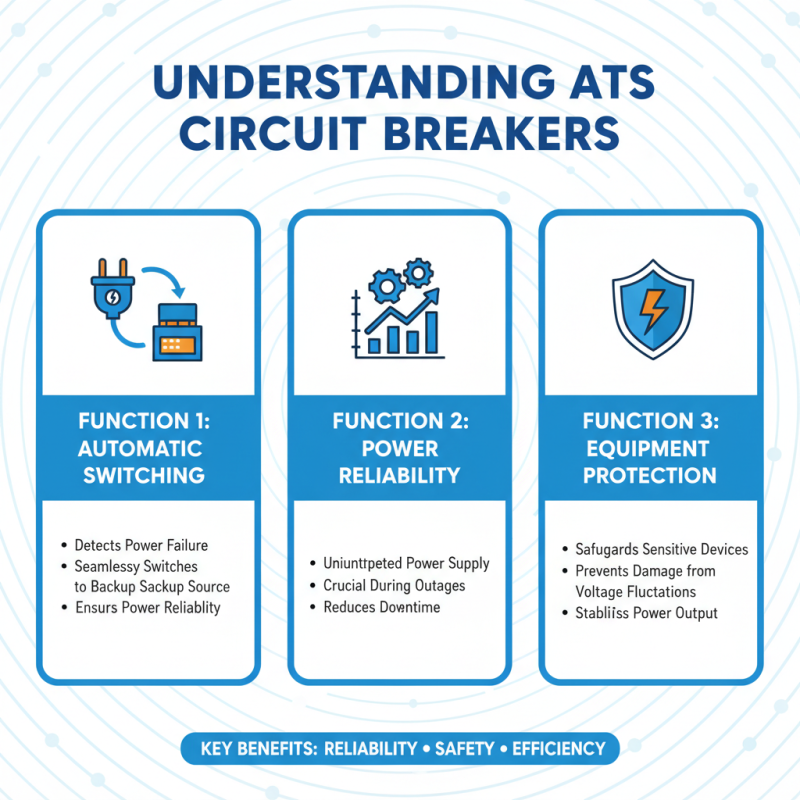
Understanding ATS Circuit Breakers and Their Functions
ATS circuit breakers play a crucial role in electrical systems. They provide automatic transfer switching, ensuring power reliability during outages. Understanding their functions helps in selecting the right type. These devices detect power failures and seamlessly switch to backup sources. They protect sensitive equipment from voltage fluctuations.
Choosing the right ATS circuit breaker requires knowledge. Not all options suit every situation. Consider your power needs, voltage ratings, and load types. Different applications demand specific features. For example, residential setups may need simpler breakers. In contrast, industrial uses might require advanced models with remote control.
Sometimes users overlook installation details. Improper setups can lead to failures. Regular maintenance is essential, though often neglected. Ignoring this aspect can result in unexpected outages. Overall, understanding ATS circuit breakers benefits both residential and commercial users. It's essential to evaluate options carefully.
Different Types of ATS Circuit Breakers and Their Applications
When selecting an ATS circuit breaker, understanding the different types available is crucial. These breakers can be categorized based on their operating mechanism and application. Common types include thermal magnetic, electronic, and hydraulic magnetic breakers.
Thermal magnetic breakers use a bimetallic strip and electromagnetic coil for protection. They are reliable for residential applications but may lack sensitivity to short-duration surges.
Electronic circuit breakers, on the other hand, provide advanced features like adjustable trip settings. They are best for industrial environments where equipment can experience varied load conditions. Their precise limits help prevent nuisance tripping, but they can be more complex to install.
Hydraulic magnetic breakers are often used in marine applications due to their robustness and ability to withstand harsh conditions.
Choosing the right type involves understanding your specific needs and the limitations of each breaker. A breaker that works well in one situation may not perform effectively in another. Assessing the characteristics of your electrical system can prevent potential issues down the line. It’s vital to consider both the immediate requirements and future expansions when making this decision.
Key Factors to Consider When Selecting an ATS Circuit Breaker
When selecting an ATS circuit breaker, several key factors require careful consideration. First, assess the electrical load requirements. Understanding the total wattage is crucial. Insufficient capacity can lead to frequent tripping. Moreover, over-specifying can increase costs unnecessarily.
Next, consider the operating environment. Is it indoors or outdoors? Temperature extremes can affect performance. Selecting a breaker with the proper environmental rating helps ensure reliability. Additionally, examine the breaker’s response time. A quicker response can prevent equipment damage during faults.
Compatibility with existing systems also matters. New breakers should seamlessly integrate. Check voltage ratings and communication protocols. There can be a steep learning curve when upgrading systems. As technology evolves, staying informed on new developments is essential. Making the right choice is a nuanced process. Balancing technical information and project needs is vital.
How to Evaluate the Load Requirements for Your ATS Circuit Breaker
When evaluating load requirements for your ATS circuit breaker, start by calculating the total load of your connected equipment. The National Electrical Manufacturers Association (NEMA) suggests considering all devices that will run concurrently. This total wattage aids in sizing the breaker adequately. For instance, if your equipment draws 15 kW, you should consider a circuit breaker that exceeds this wattage by at least 25%. This safety margin is crucial to account for unexpected peaks.
Next, consider the breaker’s voltage ratings and phase requirements. According to the Institute of Electrical and Electronics Engineers (IEEE), many industrial applications operate at 480V and may require three-phase systems. Elegant planning ensures that your ATS circuit can handle the expected load under varied conditions. The breaker needs to interrupt fault currents effectively; according to IEEE standards, this might mean selecting breakers with interrupting capacities between 10 kA to 30 kA, depending on the installation type.
Finally, review the load characteristics, such as whether it is resistive, inductive, or capacitive. Industries often report challenges matching loads with the correct breaker type. When in doubt, consult a licensed electrician. Their expertise ensures your selection meets safety standards while striving for efficiency. The complexity of these requirements cannot be overstated, yet they are vital for a reliable power system.
Installation and Maintenance Tips for ATS Circuit Breakers
When selecting an Automatic Transfer Switch (ATS) circuit breaker, proper installation and maintenance are crucial. The right installation ensures reliable power transfer during outages. Many users overlook the positioning of the breaker. It should be easily accessible for routine checks. Pay attention to the mounting location, avoiding damp or strenuous environments.
For maintenance, regular inspections can prevent failures. Look for signs of wear or corrosion. This practice helps identify potential issues before they escalate. Keep the circuit breaker clean and dry. Dust accumulation can affect performance, leading to malfunction. It's wise to consult an expert for an annual review.
Here are a few tips to enhance your experience with ATS circuit breakers. Always follow the manufacturer’s guidelines for installation. This ensures compliance and safety. Utilize appropriate tools for any adjustments to avoid damage. Consider labeling your circuit connections for quick identification. Small details like these can make a significant difference.
How to Choose the Right ATS Circuit Breaker for Your Needs? - Installation and Maintenance Tips for ATS Circuit Breakers
| Dimension |
Description |
Recommendation |
| Voltage Rating |
The maximum voltage the circuit breaker can handle. |
Choose a voltage rating that matches your system (e.g., 120V, 240V). |
| Current Rating |
The maximum continuous current the breaker can support. |
Select a current rating that exceeds your load requirements. |
| Number of Poles |
The number of circuits the breaker can control. |
Determine based on how many phases are in your electrical system. |
| Interruption Capacity |
The maximum fault current the breaker can interrupt. |
Ensure it's higher than the potential short-circuit current. |
| Mounting Type |
How the circuit breaker is installed (e.g., panel mount). |
Choose a mounting style compatible with your panel layout. |
| Features |
Additional functionalities like remote monitoring or surge protection. |
Consider features that enhance safety and usability. |










 Claire
 Mr.Fu
Mr.Fu

 Claire