How to Choose the Right Rmu Circuit Breaker for Your Needs?
Choosing the right RMU Circuit Breaker is crucial for ensuring system reliability. According to industry expert John McIntyre, “The selection process can significantly impact operational efficiency.” His insights illuminate the complexities involved in this decision-making process.
In the ever-evolving field of electrical engineering, understanding your needs is essential. RMU Circuit Breakers protect power distribution networks. They handle various fault conditions, but selecting the wrong type can lead to equipment failures or increased operational costs. Variables such as power rating, installation environment, and maintenance requirements all play a role.
While many may overlook minor details, each aspect deserves attention. The right RMU Circuit Breaker enhances system performance, but remember, it's not one-size-fits-all. Engaging with knowledgeable professionals can provide guidance. Striking a balance between cost and quality can also be challenging. The process requires both reflection and due diligence.

Understanding RMU Circuit Breakers: Key Overview and Types
When selecting the right RMU circuit breaker, understanding the different types is crucial. RMU, or Ring Main Unit, circuit breakers are vital for electrical distribution systems. They protect equipment from overloads and short circuits. There are several types, including indoor and outdoor models. Each serves a specific function in safeguarding your network.
Tips for evaluating circuit breakers include assessing your power requirements. Calculate the maximum load your system will handle. This ensures that the breaker can manage peaks in demand without tripping. Consider environmental factors too. Outdoor breakers must endure weather elements, while indoors need to fit confined spaces.
Regularly review your system needs. Technology advances, and equipment may require updates. Sometimes a circuit breaker may fall short of modern efficiency standards. Reflection on your current equipment can lead to improved performance and safety. Ultimately, choosing the right RMU circuit breaker requires careful consideration of both type and application.
How to Choose the Right Rmu Circuit Breaker for Your Needs?
| Type |
Voltage Rating (kV) |
Current Rating (A) |
Breaking Capacity (kA) |
Applications |
| Vacuum Circuit Breaker |
12 |
630 |
25 |
Industrial applications |
| SF6 Circuit Breaker |
24 |
1250 |
40 |
Utilities and substations |
| Air Circuit Breaker |
15 |
400 |
25 |
Commercial buildings |
| Miniature Circuit Breaker |
1 |
32 |
6 |
Residential use |
| Oil Circuit Breaker |
33 |
2000 |
50 |
Power generation |
Evaluating Load Requirements: Determining Breaker Capacity and Ratings
When selecting the right RMU circuit breaker, load requirements are key. Consider the capacity needed for your electrical system. Breakers must handle peak loads without tripping. An inadequate rating can lead to operational failures and delays. Assess both normal and peak loads carefully.
One important aspect is the continuous current rating. Ensure it matches your system's demands. For instance, if your load fluctuates, select a breaker with some headroom. This allows for unexpected surges. Also, factor in future expansions. Planning ahead can save costs later.
Tips: Always consult professional guidelines. Different environments require different specifications. If you're uncertain, seek expert opinions. Small miscalculations can lead to big issues. Measure system loads accurately. Use reliable tools for assessments. Regular checks can prevent unexpected breakdowns. Adjust your choices based on real-time data whenever possible.
Evaluating Load Requirements for RMU Circuit Breakers
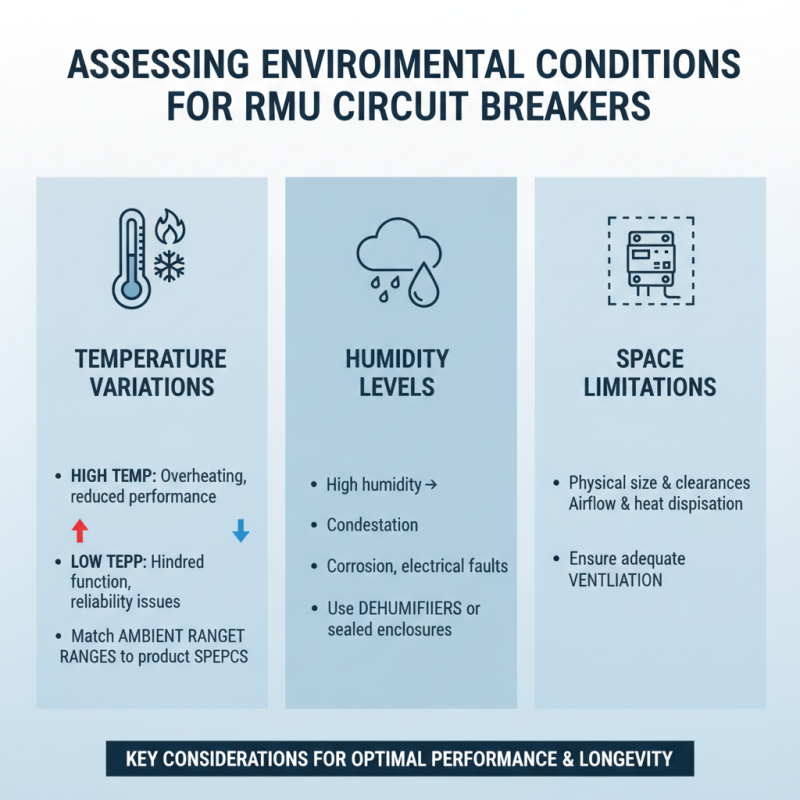
Assessing Environmental Conditions: Temperature, Humidity, and Space Limitations
When selecting an RMU circuit breaker, assessing environmental conditions is crucial. Temperature variations can greatly affect circuit breaker performance. A too-high temperature may lead to overheating, while extreme cold can hinder optimal function. Consider the ambient temperature ranges where the breaker will operate. They should match the specifications in the product documentation.
Humidity also plays a vital role. High humidity can cause condensation within electrical components, increasing the risk of failures. It’s essential to evaluate the location's moisture levels. Implement protective measures if necessary, such as housing designs that mitigate humidity impact. Sometimes, it’s easy to overlook these factors until issues arise.
Space limitations must not be underestimated either. The installation area should allow for proper ventilation of the circuit breaker. Crowded spaces can trap heat and limit accessibility for maintenance. Sometimes, users underestimate the importance of having adequate clearance around the breaker. If the space is too tight, operational efficiency could suffer. Always plan ahead to ensure the chosen breaker fits well into its designated area.
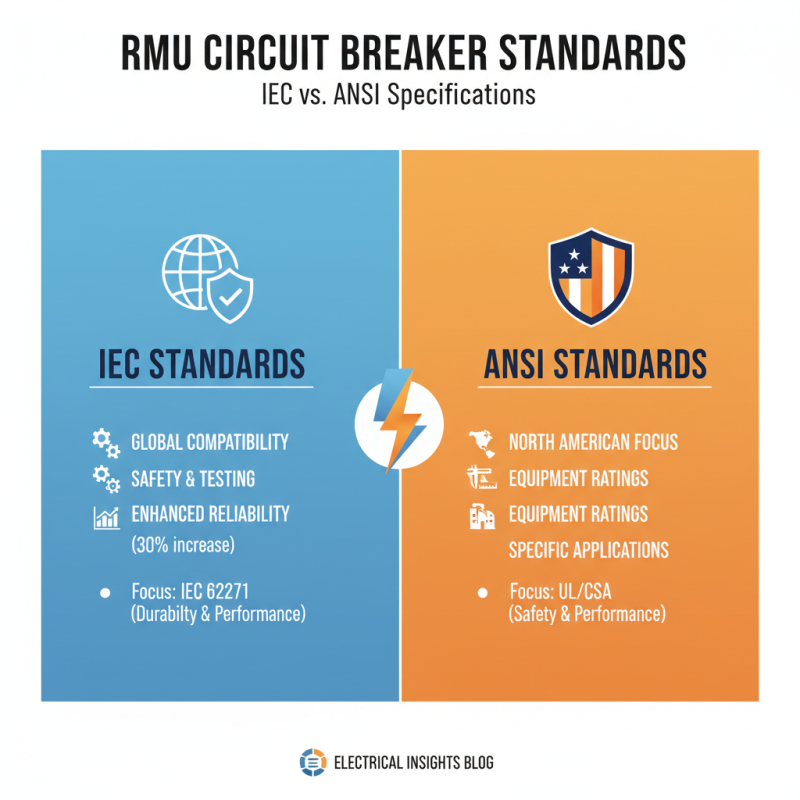
Comparing Manufacturer Standards: IEC vs. ANSI Specifications
When selecting an RMU circuit breaker, understanding the differences between IEC and ANSI standards is crucial. IEC standards, widely used globally, emphasize international compatibility and safety. They focus on testing methods and operational environments. For instance, IEC 62271 has defined parameters for durability and performance. Many reports indicate that compliance with IEC standards can enhance equipment reliability by up to 30% compared to non-compliant systems.
ANSI standards, prevalent in North America, offer specific guidelines tailored to the region's electrical infrastructure. These standards focus on utility applications, emphasizing the need for breakage capacity in various utility conditions. Recent industry statistics suggest that equipment adhering to ANSI specifications can respond to surge events more effectively, reducing the risk of power outages by about 15%. However, variations in terminology and testing methods can lead to confusion for engineers trying to choose the appropriate breaker.
In practice, each standard presents its challenges. Some users may find that IEC equipment is more expensive upfront, while ANSI's regional focus could limit interoperability. Deciding the right standard requires assessing your specific needs against possible drawbacks. A thorough understanding of both IEC and ANSI standards helps in making informed choices in the selection process. This knowledge can directly influence operational efficiency and safety standards in your organization.
Analyzing Cost Factors: Budget Considerations for Circuit Breaker Selection
When selecting an RMU circuit breaker, budget considerations play a critical role. Understanding the costs involved can help you make informed decisions.
Start by evaluating the total cost of ownership. This includes not only the initial purchase price but also installation and maintenance costs.
A cheaper circuit breaker might save you money upfront but could lead to higher costs later due to repairs or inefficiencies.
Additionally, consider the reliability and lifespan of the circuit breaker.
More expensive options often come with advanced features that enhance reliability, reducing the risk of failures.
If you choose a low-cost option, weigh the potential risks. This might result in unexpected downtime or safety concerns.
It’s essential to balance affordability with the long-term value of the circuit breaker.
Lastly, never underestimate the importance of expert consultation.
Many professionals can provide valuable insights tailored to your specific needs.
They can analyze your situation and suggest options that fit your budget while not compromising quality.
Engaging with industry experts helps ensure that your choice aligns with your operational demands and financial capabilities,
ultimately contributing to a more resilient electrical system.











 Claire
 Mr.Fu
Mr.Fu

 Claire