Leave Your Message

7 Gas Switchgear Buying Tips for Global Buyers

Gas Switchgear procurement is not just a matter of matching voltage and price. A substation drawing may show a compact unit, but the buyer must also consider fault levels, indoor or outdoor installation, service access, delivery schedules, and local maintenance capability. Space is tight. A missed interface detail can delay installation or require costly site changes.

The scale of grid investment makes careful equipment selection increasingly important. The International Energy Agency’s Electricity Grids and Secure Energy Transitions (2023) estimates that about 80 million kilometres of grids must be added or refurbished by 2040. It also says annual grid investment needs to rise from roughly USD 300 billion to more than USD 600 billion by 2030. These figures do not predict demand for any single switchgear type, but they underline the pressure on buyers to specify equipment that fits long-term network plans. Environmental performance deserves equal attention. The IPCC’s Sixth Assessment Report gives sulfur hexafluoride (SF6) a 100-year global warming potential of 25,200, making leak prevention, gas handling, and end-of-life planning important procurement questions. A specification sheet alone cannot settle every choice; project conditions and supplier support still matter. The following seven buying tips help global buyers compare technical fit, verified performance, lifecycle costs, and after-sales service without treating the lowest quotation as the safest decision.

7 Gas Switchgear Buying Tips for Global Buyers

Define the Voltage Class: IEC 62271-203 Covers GIS Above 52 kV

For a gas-insulated switchgear purchase, confirm the voltage class before comparing layouts or prices. IEC 62271-203:2022 covers AC GIS rated above 52 kV. Equipment rated exactly 52 kV falls outside that scope, so check the applicable standard and project specification rather than assuming the next class fits. That boundary matters. Ask suppliers to state rated voltage, insulation levels, short-circuit ratings, and the standard edition used for design and testing. Review the nameplate data against the single-line diagram; a mismatch can survive a quick document check.

The International Energy Agency’s Electricity Grids and Secure Energy Transitions (2023) estimates that 80 million kilometres of grids need to be added or refurbished by 2040, roughly matching the length of the existing global grid. For buyers, that scale makes future extension worth checking now. Confirm that the proposed GIS arrangement allows the required busbar connections and provides clear space for later bays. Also request evidence for temperature-rise and dielectric tests at the specified ratings, plus operating limits for site altitude and ambient temperature. I would still verify each condition against the project’s actual duty; a copied specification can miss a small but costly detail.

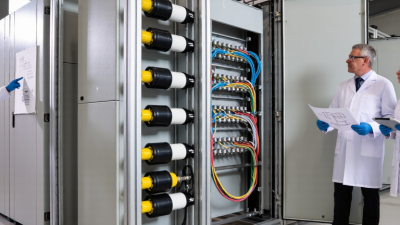
Compare Insulating Gases: SF₆ Has a 100-Year GWP of 25,200

When comparing gas-insulated switchgear, look beyond the equipment’s rated voltage and footprint. SF₆ has a 100-year global warming potential (GWP) of 25,200, so even a small leak can have a substantial climate impact. That matters. Ask suppliers for the insulating-gas composition, the stated GWP, and the assessment basis behind that figure. Comparisons are only useful when they use the same time horizon and method.

Check how each option performs under the temperatures and operating conditions at your installation site. Request details on dielectric performance, pressure limits, gas monitoring, and maintenance procedures. A lower-GWP gas may bring different handling needs or equipment requirements; compare the complete system, not just the gas label. Not a small detail. Confirm whether service staff can obtain the required training and replacement gas locally.

Review the supplier’s leakage-control measures and end-of-life recovery process, and ask for documented test results. During a factory review, request clear instructions for filling, sampling, and recording gas losses. These records help operators spot trends before a minor leak becomes a repeated maintenance issue. I would also check the assumptions behind any environmental comparison; a single headline number rarely tells the whole lifecycle story.

7 Gas Switchgear Buying Tips for Global Buyers - Compare Insulating Gases: SF₆ Has a 100-Year GWP of 25,200

Use the gas comparison as a screening guide, then verify performance, safety, and compliance for the exact equipment design and destination market. GWP values below are 100-year values from IPCC Sixth Assessment Report data; “not assigned” means a single value is not provided for that gas or mixture.

Insulating-gas comparison
Gas or gas type 100-year GWP Buying consideration Questions to verify
Sulfur hexafluoride (SF₆) 25,200 Strong insulating and arc-quenching performance; leakage and end-of-life handling matter because of its very high GWP and long atmospheric lifetime. What are the gas-leakage limits, monitoring provisions, recovery procedures, and applicable reporting requirements?
Nitrogen (N₂) 0 No direct GWP; electrical performance depends on equipment design, pressure, and the intended voltage and duty. Is the complete assembly type-tested for the specified gas, pressure, temperature range, and switching duty?
Carbon dioxide (CO₂) 1 Low GWP relative to SF₆, but insulation and interruption performance must be assessed for the specific equipment configuration. What are the specified gas composition, operating pressure, and performance limits across the rated ambient temperatures?
Dry air Not assigned as a single-gas value A nitrogen-and-oxygen mixture with no SF₆; moisture control and the design’s insulation requirements are important. What dew-point or moisture limits, gas-quality checks, and maintenance steps are specified?
Gas mixtures Depends on composition A mixture’s GWP depends on its constituents and proportions; its electrical and environmental performance should not be inferred from one component alone. Request the full composition, mixture-level GWP basis, safety data, and recovery or disposal instructions.
Seven buying tips for global buyers
No. Buying tip What to compare Evidence to request
1 Match the equipment to the application Rated voltage, continuous current, short-circuit withstand, switching duty, installation environment, and indoor or outdoor use. A rating schedule and test documentation for the offered configuration.
2 Compare insulating gases and GWP Gas identity, mixture composition, 100-year GWP basis, required pressure, and performance of the complete assembly. Gas specifications, mixture-level GWP calculation, and equipment test results.
3 Check standards and local approvals Applicable IEC or other destination-market standards, certification scope, and local grid or utility requirements. Current certificates and reports that identify the tested model and configuration.
4 Review safety and operating limits Pressure limits, temperature range, gas-handling hazards, ventilation needs, and procedures following internal faults. Operating instructions, safety data, and installation and maintenance guidance.
5 Assess leakage control and gas management Gas-tightness design, monitoring, top-up needs, recovery method, and end-of-life handling. Leakage specifications and a documented recovery and disposal procedure.
6 Calculate whole-life cost Purchase price, expected service intervals, spare parts, gas handling, training, energy losses, and disposal costs. A lifecycle cost breakdown with stated assumptions and warranty terms.
7 Confirm delivery and support readiness Lead time, export packing, customs documentation, commissioning support, local service coverage, and spare-parts availability. A delivery schedule, packing details, support plan, and parts list.

Note: GWP is a relative climate-impact metric, not a measure of electrical performance or overall product lifecycle emissions. Confirm regulatory requirements and the applicable GWP assessment basis for each destination market.

Check Short-Circuit Ratings Against IEC 62271 Test Requirements

Short-circuit ratings are not one number. Check rated breaking current, peak withstand current, and short-time withstand current with its duration. IEC 62271-100 sets circuit-breaker test requirements, including short-circuit interruption and transient recovery voltage. For metal-enclosed switchgear above 1 kV and up to 52 kV, IEC 62271-200 is also relevant. IEC 62271-1 lists preferred short-circuit durations of 0.5, 1, 2, and 3 seconds.

Tip: Match the equipment rating to the fault level calculated at the installation point. Compare the nameplate and test report line by line. A 1-second withstand result does not establish a 3-second rating. Confirm test voltage, current, frequency, and test configuration—not only the headline kA value. I still double-check the test schedule; tidy paperwork can conceal a condition mismatch.

CIGRE Technical Brochure 513 reports field failure and service-exposure data for GIS. Use such fleet data to inform reliability questions, not as proof that a specific unit passed its required tests. Ask suppliers for the type-test certificate and traceable test records. Check that the tested configuration matches the offered bus arrangement, earthing switch, and enclosure design. A small discrepancy matters. Verify it before purchase.

Assess Site Conditions, Including Altitude and Ambient Temperature

7 Gas Switchgear Buying Tips for Global Buyers

Before comparing gas switchgear, record the site elevation and the lowest and highest expected ambient temperatures. A mountain substation at 2,400 metres presents different conditions from a coastal indoor room. Thinner air can affect external insulation, including bushings and cable terminations, even when the main insulation is sealed inside the equipment. Ask the supplier to confirm the unit’s altitude rating and any required derating for the actual installation height. Small details matter.

Temperature deserves equally careful attention. Direct sun on a metal enclosure can raise its surface temperature well above the shaded air reading. Check the rated operating range, current-carrying capability, ventilation needs, and gas-density monitoring across seasonal extremes. Gas pressure varies with temperature, so verify that the monitoring system accounts for expected conditions and gives clear alarms. Do not rely only on a regional weather average.

Walk the proposed installation area and note nearby walls, roofs, heaters, or restricted airflow. Measure, don’t guess. Site records are often incomplete; that is not a reason to assume the conditions are mild. Share the site data with the manufacturer and request written confirmation of suitability, including any limits or installation adjustments. A small uncertainty in the survey can become a real maintenance headache later.

Compare Lifecycle Costs, Maintenance Needs, and Supplier Support

7 Gas Switchgear Buying Tips for Global Buyers

A low purchase price can hide years of service costs. Compare the full lifecycle: installation, inspections, spare parts, outage time, and eventual decommissioning. The IEA’s 2023 Electricity Grids and Secure Energy Transitions report says annual grid investment must rise above USD 600 billion by 2030 in its net-zero pathway. That pressure makes dependable equipment and predictable maintenance more valuable. Ask suppliers for a cost model covering at least the expected service life, not just the first invoice. Check what routine inspections require, how quickly critical parts can arrive, and whether technicians are available near your operating sites. Small details matter. A delayed seal or specialist visit can extend an outage.

Maintenance plans should also explain gas monitoring, leak response, recordkeeping, and staff training. The IPCC Sixth Assessment Report gives sulfur hexafluoride a 100-year global warming potential of 25,200, so sound handling procedures are part of responsible ownership. Compare suppliers’ documented service intervals and request evidence from comparable installations. Confirm what remote diagnostics actually detect, and what still needs an on-site inspection. A polished service promise is not proof. Ask for response-time commitments, escalation contacts, and spare-parts lead times in writing. One awkward question is worth asking: who supports the equipment after the original project team has moved on?