
- Home
- About Us
- Products
- Download
- News
- Contact Us
Leave Your Message
Choosing the right Ring Main Unit Substation supplier in 2026 requires more than comparing catalog prices. Utilities, industrial plants, and commercial facilities need dependable equipment, clear documentation, and support that remains available after installation. A supplier may offer an attractive specification, yet weak commissioning assistance can create costly delays. This guide examines manufacturers through practical performance, engineering capability, product quality, and customer reliability.
The evaluation considers insulation technology, fault ratings, enclosure protection, remote monitoring, maintenance access, and compatibility with modern distribution networks. It also reviews factory testing, certification, delivery experience, spare parts, and technical training. Details matter. A well-designed unit should allow safe cable termination in a compact switch room, while its controls should remain understandable during a stressful outage. Experienced suppliers can explain how their equipment performs under humidity, dust, temperature changes, and frequent switching.
Not every supplier communicates limitations clearly. That deserves attention. Some published claims may depend on specific configurations, installation conditions, or regional standards. Buyers should request test records, reference projects, warranty terms, and realistic service response times before making a decision. Field experience also shows that even respected manufacturers can have gaps in documentation or after-sales coverage. This comparison therefore avoids treating brand reputation as the only measure. It focuses on evidence, application fit, and long-term operating confidence. The strongest Ring Main Unit Substation suppliers are not necessarily the loudest marketers. They are the companies that deliver consistent engineering, transparent support, and equipment that performs when the network is under pressure.
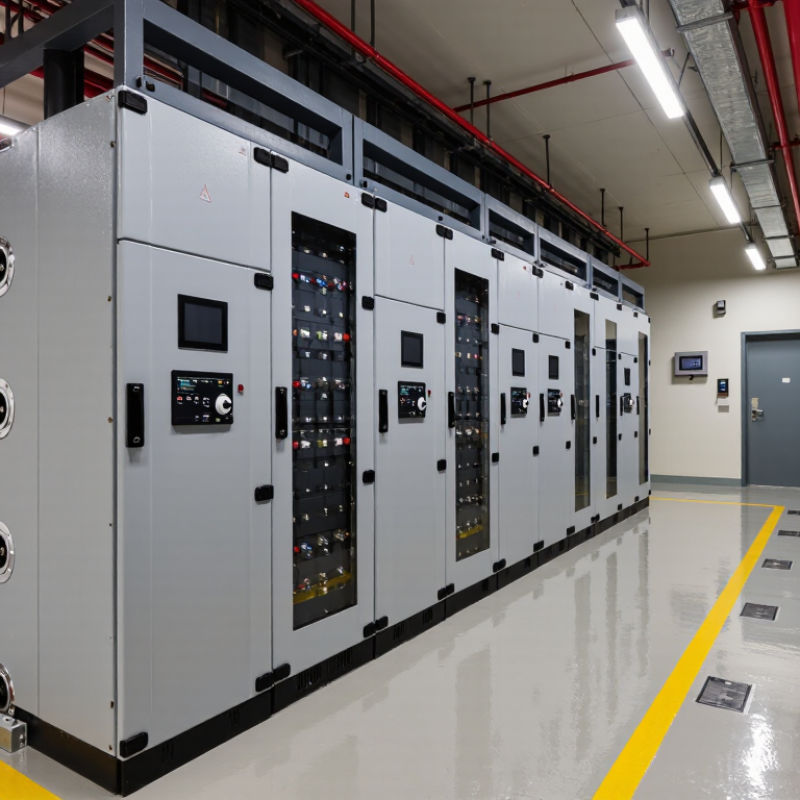
A ring main unit (RMU) substation is a compact medium-voltage installation that connects distribution cables to a local transformer. The RMU contains switching and protection equipment inside a metal enclosure. Its ring arrangement lets a distribution circuit receive power from either direction, depending on the network design. If a cable section develops a fault, operators can isolate that section and may restore supply through the other side. The exact result depends on system configuration and operating procedures.
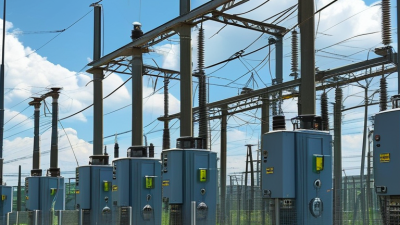
Inside the substation, the transformer reduces medium voltage to a level suitable for nearby buildings or equipment. A typical site may include an RMU, transformer, low-voltage distribution panel, earthing connections, and access space for inspection. On a site visit, clear labels and unobstructed working areas are easy details to overlook. They matter. RMUs are chosen for their small footprint and dependable switching, but compact equipment still needs correct ratings, installation, and maintenance. The term “ring” does not guarantee uninterrupted power; a fault, planned outage, or limited network capacity can still interrupt supply. That distinction deserves a closer look when assessing a substation design.
A ring main unit (RMU) is a compact medium-voltage switchgear assembly used to connect and protect sections of a distribution network. Use the criteria below to compare suppliers and verify that a proposed RMU suits the project. Ratings and configurations vary by product; confirm all values against the manufacturer’s tested documentation.
| Comparison dimension | What to evaluate | Typical options or reference | Evidence to request |
|---|---|---|---|
| Rated voltage | Compatibility with the network’s nominal and highest operating voltage. | Common product classes include 12 kV and 24 kV; selection depends on the network specification. | Nameplate data and type-test documentation for the offered configuration. |
| Rated current | Continuous current capability of busbars and switching devices. | Many distribution RMUs offer 630 A circuit ratings, but available ratings differ by design and function. | Rated-current schedule and temperature-rise test results. |
| Short-circuit withstand | Thermal and peak withstand ratings matched to the prospective fault level and protection-clearing time. | Ratings such as 20 kA or 25 kA for a specified duration are available in some product ranges; they are not universal. | Short-time and peak withstand test reports for the exact assembly. |
| Switching arrangement | Number and type of ring switches, circuit-breaker ways, and transformer feeder protection. | Configurations commonly include two ring ways with one transformer feeder, with other arrangements available. | Single-line diagram, operating sequence, and interlocking description. |
| Insulation and enclosure | Insulation medium, sealing system, internal-arc classification, and suitability for indoor or outdoor installation. | Designs may use gas, solid, or air insulation. IP protection and internal-arc performance are configuration-specific. | Environmental ratings, internal-arc test classification where required, and installation limits. |
| Standards and testing | Compliance with applicable switchgear standards and project or utility requirements. | IEC 62271-200 is relevant to AC metal-enclosed switchgear; other parts of the IEC 62271 series may apply to specific devices. | Valid type-test reports, routine-test plan, and a standards compliance statement. |
| Protection and monitoring | Relay functions, fault indication, voltage detection, and optional remote monitoring or automation. | Options depend on feeder design and control requirements; protection settings must be coordinated with the network. | Relay data, communication protocol list, wiring diagrams, and protection coordination support. |
| Service and lifecycle support | Commissioning assistance, spare-parts availability, maintenance requirements, and warranty terms. | Support scope and maintenance intervals vary by design, operating conditions, and contractual terms. | Written warranty, service response commitments, maintenance manual, and spare-parts list. |
| Supplier evaluation | Compare technical compliance, documented test results, delivery scope, support capability, and total lifecycle cost. | There is no single best supplier for every project; suitability depends on the specification, site conditions, and local requirements. | Use the same technical schedule and commercial scope when requesting and comparing quotations. |





 Claire
 Mr.Fu
Mr.Fu

 Claire