Top 10 ATS Electrical Panel Types for Global Buyers?
Choosing the right Ats Electrical Panel begins with understanding the application, not chasing the lowest quoted price. Hospitals, data centers, factories, and commercial buildings face different continuity requirements. A panel that performs well in a warehouse may be unsuitable for a medical facility. This distinction matters.
Global buyers must compare open-transition, closed-transition, soft-load, bypass-isolation, and integrated ATS designs. Each type handles transfer timing, maintenance, and load sensitivity differently. Voltage, frequency, short-circuit ratings, enclosure protection, and control interfaces also require careful review. A reliable selection should match the generator, utility supply, connected loads, and local installation conditions.
Details often decide performance. A dusty production floor may need a stronger enclosure. A data center may require closed-transition transfer to reduce interruptions. A remote site may prioritize simple controls and accessible replacement parts. Certification marks help, but they do not replace technical verification. Buyers should request test records, wiring diagrams, factory documentation, and clear warranty terms. Supplier experience matters too. References from similar projects provide useful evidence.
No shortlist is perfect. A lower-cost model can create higher maintenance expenses later. A highly advanced unit may confuse operators without proper training. Specifications can also be incomplete or interpreted differently across regions. This guide reviews ten ATS Electrical Panel types for global buyers, focusing on practical use, technical differences, selection risks, and procurement questions. The goal is not to promote one universal solution. It is to support a defensible decision based on safety, reliability, serviceability, and verified project requirements.
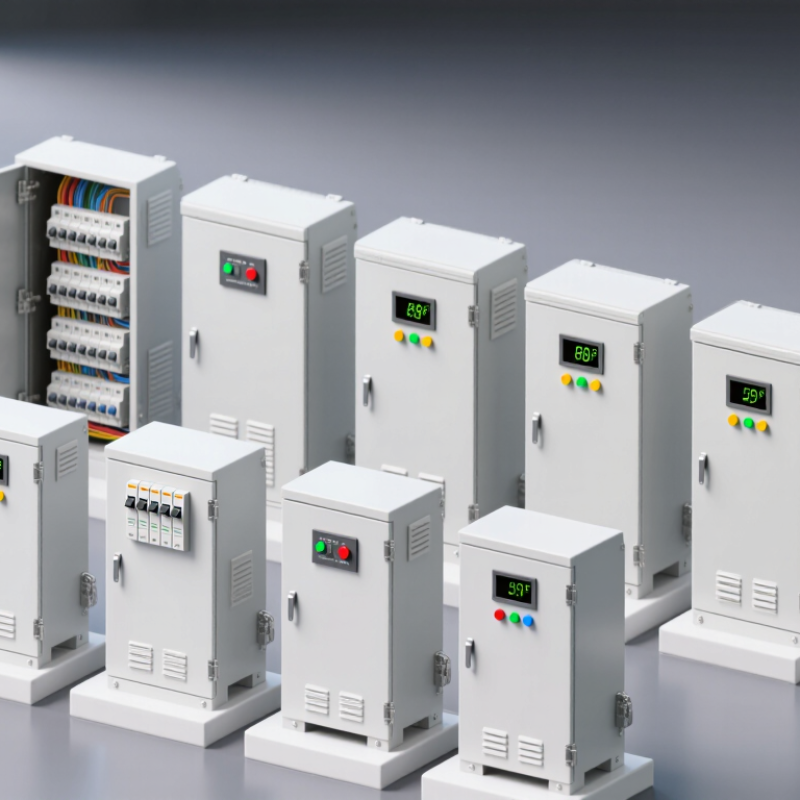
ATS Electrical Panel Fundamentals and Their Role in Power Continuity
An automatic transfer switch (ATS) electrical panel keeps essential loads energized when the normal source fails. It monitors voltage, frequency, and phase conditions continuously. Within seconds, it can transfer power to a standby generator or a second utility source. The panel usually contains a controller, switching mechanism, protection devices, and clear status indicators. Small clinics may use compact single-phase ATS panels. Data facilities often require three-phase, service-entrance-rated, bypass-isolation, or delayed-transition designs.
Common configurations include open-transition, closed-transition, delayed-transition, utility-to-generator, and utility-to-utility panels. Open transition briefly disconnects both sources, while closed transition overlaps them under controlled conditions.
Delayed transition allows motors to discharge before reconnection. Bypass-isolation models support maintenance without interrupting critical loads. This detail matters beside pumps, elevators, servers, and medical equipment. A poorly selected transition mode can create nuisance trips or damaging inrush current.
In field commissioning, technicians should verify phase rotation, sensing delays, alarm contacts, and manual operation. Test the panel under realistic load conditions. A monthly no-load start test is useful, but it does not prove transfer performance. Load-bank testing reveals weaknesses that visual inspections miss. One assumption deserves doubt: a larger ATS is not automatically safer. Cable size, fault ratings, enclosure conditions, ventilation, and local installation rules must match. Even experienced teams sometimes overlook neutral switching or battery weakness. Record every test result, including failed attempts and corrective actions.
Ten Major ATS Electrical Panel Types for Different Applications
Automatic transfer switch panels serve different loads, source arrangements, and installation environments. Open-transition ATS panels briefly disconnect both sources, making them practical for general standby power. Closed-transition panels overlap sources for a short period, reducing interruptions during transfer. Delayed-transition panels add a controlled pause, helping discharge motors and prevent inrush problems. Bypass-isolation ATS panels allow maintenance without shutting down critical loads. This matters in hospitals and data rooms.
Service-entrance ATS panels include main disconnect functions near the utility entry point. Utility-to-generator panels transfer building loads between normal utility power and one standby generator. Generator-to-generator panels select between two generators, improving resilience for large facilities. Mains-to-mains panels switch between two independent utility feeders, often used in commercial complexes. Manual bypass transfer panels provide local operation when automatic controls fail, although they require trained personnel. Medium-voltage ATS panels handle higher distribution voltages and demand careful insulation, clearance, and protection coordination.
Selection should match load size, fault current, switching time, enclosure rating, and local certification requirements. A panel may fit the diagram but fail in a dusty pump room. Small details matter. Verify neutral switching, generator compatibility, communication signals, and maintenance access before ordering. Specifications are sometimes incomplete, and that deserves a second review. Worked examples, witnessed testing, and clear wiring documents make global procurement more dependable.
How ATS Panels Differ by Transfer Mechanism, Capacity, and Configuration
Automatic transfer switch panels are not one universal product.
Global buyers commonly compare ten practical types: open-transition, closed-transition, delayed-transition, soft-load, bypass-isolation, manual, automatic, service-entrance, single-phase, and three-phase panels. These categories can overlap, so the selection process needs careful review.
The transfer mechanism controls how quickly the load moves between sources.
Open-transition panels briefly disconnect both sources, which suits many standard loads. Closed-transition panels overlap sources for a controlled interval, reducing interruption but requiring precise synchronization. Delayed-transition models add a pause for motor decay. Soft-load designs gradually transfer power and can reduce generator stress.
Speed matters.
A hospital circuit and a pump motor may need very different settings.
Capacity begins with voltage, phase, continuous current, and short-circuit withstand ratings.
A higher ampere rating is not automatically safer. Oversizing can increase cost, enclosure size, and installation difficulty.
Configuration also changes field performance. Bypass-isolation panels support maintenance without removing essential loads. Service-entrance models integrate upstream protection and monitoring. Wall-mounted units suit compact rooms, while floor-standing enclosures allow larger cable bends and controls.
In field reviews, cable space is often underestimated. That detail deserves more attention.
Buyers should verify local standards, environmental ratings, neutral switching, generator compatibility, and actual load profiles before approving a panel.
Global Standards, Safety Requirements, and Regional Compatibility
Top 10 ATS Electrical Panel Types for Global Buyers?
Global buyers should match ATS panel types with local standards, fault levels, and source configurations. Common options include open-transition, closed-transition, delayed-transition, bypass-isolation, manual, service-entrance, generator-compatible, dual-source, networked, and modular panels. IEC 60947-6-1 supports transfer-switch requirements in many international markets, while IEC 61439-1 addresses low-voltage assembly design and verification. North American projects often require compliance with UL 1008 and NFPA 110. Regional compatibility is not automatic.
Safety margins matter. IEA’s Electricity 2024 report estimates that data-center, artificial-intelligence, and cryptocurrency loads used about 460 TWh globally in 2022. Demand could exceed 1,000 TWh by 2026. This growth increases pressure on emergency power systems, especially in hospitals, factories, and server facilities. An ATS should match voltage, frequency, short-circuit capacity, neutral switching, enclosure rating, and grounding practice. A closed-transition design reduces interruption, but it may require tighter utility coordination. That detail is sometimes missed.
Tips: Request test certificates, wiring diagrams, temperature-rise data, and regional approval evidence before ordering. Confirm whether the panel supports 3-pole or 4-pole switching. Check installation space, cable-entry direction, maintenance bypass access, and local inspection rules. In practice, specifications can look complete while omitting generator retransfer timing. That deserves a second review.
Top 10 ATS Electrical Panel Types for Global Buyers
The chart compares common automatic transfer switch panel configurations by nominal system voltage. These are standard electrical distribution voltages used in different regions; actual equipment selection must also verify frequency, phase arrangement, fault rating, enclosure requirements, and local certification.
Typical reference frameworks include IEC 60947-6-1 and IEC 61439 for IEC markets, UL 1008 and NFPA 70 for North America, and regional installation rules such as the NEC or applicable national electrical codes. A voltage match alone does not confirm regional compatibility.
How to Select the Right ATS Electrical Panel for International Projects
Selecting an ATS electrical panel for an international project requires more than comparing prices. Start with the site voltage, frequency, phase arrangement, and available fault current. These details determine the correct switchgear rating and protection design. A panel suitable for one country may fail approval in another.
Review the transfer method carefully. Open transition suits many general installations, while closed transition can reduce interruption but needs tighter coordination. Confirm transfer and retransfer delays with the generator supplier. Check bypass-isolation access, manual operation, enclosure rating, temperature range, and installation altitude. For hospitals, data rooms, and factories, maintenance access matters as much as automatic performance. Field reviews often find a simple problem: the panel fits electrically, but not inside the allocated room.
Tips: Request a complete technical schedule before ordering. Include drawings, wiring diagrams, test records, certificates, spare-part lists, and local-language labels where required. Verify compliance with the destination’s electrical code and inspection process. Ask how the controller handles phase loss, under-voltage, frequency drift, and source failure. Factory testing is valuable, but site testing still matters. Cable entries, grounding, and communication wiring can expose weaknesses later. Allow space for heat dissipation and future service. Some specifications look complete yet omit harmonics or generator neutral arrangements. That omission deserves a second review.








 Claire
 Mr.Fu
Mr.Fu

 Claire