How to Choose the Right Switchgear Panel for Your Electrical System?
Choosing the right Switchgear Panel for your electrical system is crucial. Expert John Smith from Power Solutions emphasizes, "A well-selected panel ensures safety and efficiency." This statement highlights the importance of making informed choices in the electrical industry.
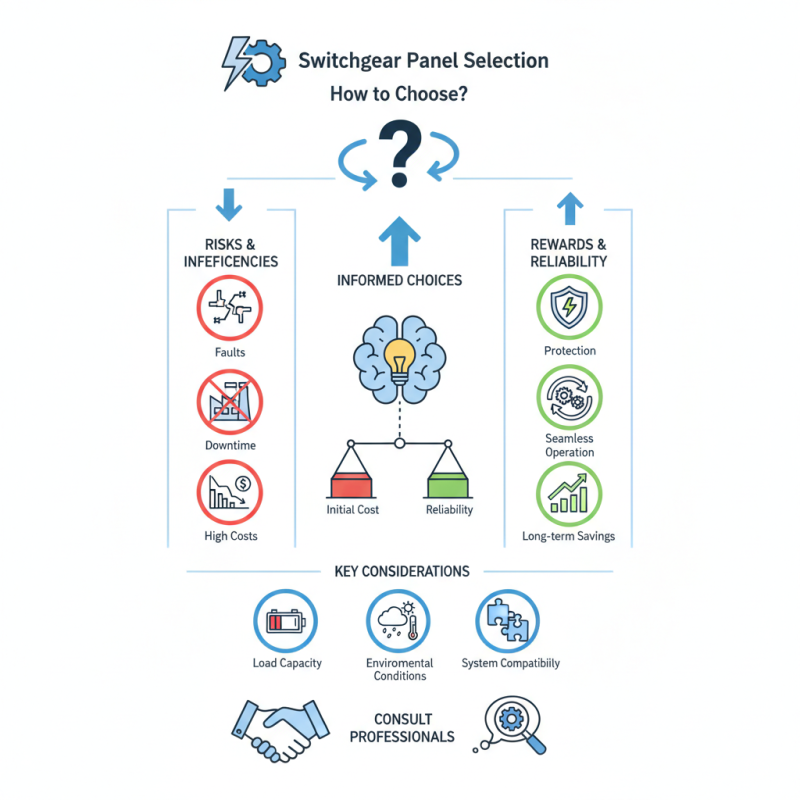
Switchgear Panels play a vital role in managing electrical power. They protect equipment from faults and enable seamless operation. A poorly chosen panel can lead to significant risks and inefficiencies. Understanding your system's requirements is essential to selecting the right panel.
Consideration of factors like load capacity and environmental conditions can influence your decision. It's also wise to evaluate the panel’s compatibility with existing systems. Each choice carries inherent risks and rewards. Consulting with professionals can help mitigate uncertainties. The selection process should prioritize long-term reliability over initial costs.
Understanding Switchgear Panels and Their Importance in Electrical Systems
Switchgear panels play a crucial role in electrical systems, serving as the backbone of power distribution. These panels manage the flow of electricity, safeguarding both equipment and personnel from potential hazards. According to a report by the International Energy Agency (IEA), nearly 20% of industrial energy losses are linked to ineffective electrical distribution. Proper selection of switchgear reduces these losses and enhances system efficiency.
Understanding the importance of switchgear panels means recognizing their multifaceted functions: disconnecting faulty circuits, controlling power, and ensuring safe operation. A study published by the Electric Power Research Institute (EPRI) indicated that systems with high-quality switchgear can improve reliability by up to 30%. This highlights the need for careful design and material choice in panel construction.
However, many organizations overlook the crucial aspect of maintenance and upgrading. Aging switchgear can lead to failures, resulting in costly downtime. The National Fire Protection Association (NFPA) notes that over 10% of electrical fires originate from poor equipment condition. Regular assessment and timely upgrades are essential to prevent such risks, ensuring a safer electrical environment for all users.
How to Choose the Right Switchgear Panel for Your Electrical System?
| Parameter |
Description |
Importance |
| Voltage Rating |
The maximum voltage for which the switchgear is designed to operate. |
Essential for ensuring safety and compliance with system requirements. |
| Current Rating |
The maximum current that can pass through the switchgear without overheating. |
Critical for preventing damage to equipment and ensuring operational efficiency. |
| Type of Switchgear |
The configuration of switchgear, such as air-insulated, gas-insulated, or hybrid. |
Determines installation space, maintenance needs, and application suitability. |
| Installation Environment |
Conditions like temperature, humidity, and exposure to dust or chemicals. |
Influences the selection of materials and protection ratings for durability. |
| Safety Standards |
Regulations and guidelines the switchgear must comply with. |
Ensures safety for personnel and equipment, as well as legal compliance. |
| Maintenance Requirements |
Details on how often and what type of maintenance is required. |
Helps in planning operational costs and downtime management. |
Key Factors to Consider When Selecting Switchgear Panels
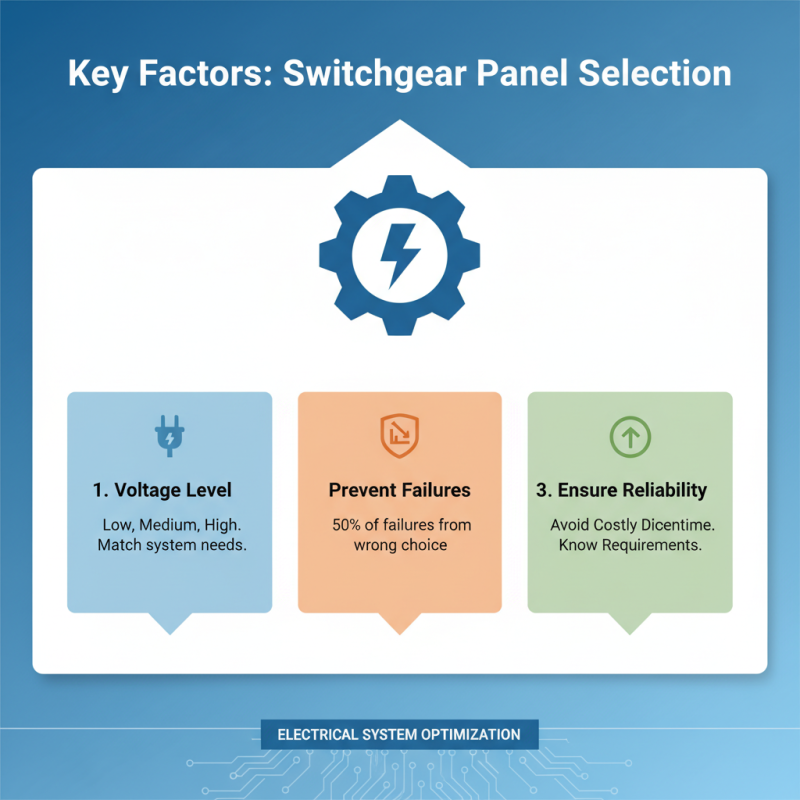
When selecting switchgear panels for an electrical system, several key factors are crucial. Understanding the voltage level of your system is essential. Low, medium, and high-voltage panels serve different purposes and environments. Reports suggest that nearly 50% of electrical system failures stem from improper equipment selection. Therefore, knowing your voltage requirements can prevent costly downtime.
Another vital aspect is the power rating and the load requirements. Assessing the total load current allows for the correct sizing of the switchgear panel. According to industry standards, undersized panels can cause overheating and equipment failure. In fact, overloading is a common issue, accounting for nearly 30% of electrical system failures. Real-world scenarios highlight the importance of matching the power capacity with system needs.
It's also crucial to consider environmental conditions. Dusty, wet, or hazardous environments impact the panel choice. Appropriate enclosure ratings, according to IEC standards, can enhance durability and safety. Yet, many overlook this detail, which can lead to significant maintenance issues later. Customizing panels based on specific site conditions improves long-term reliability.
Types of Switchgear Panels and Their Specific Applications
Switchgear panels are essential components in electrical systems. They control, protect, and isolate electrical equipment. Understanding the different types of switchgear panels helps in selecting the right one for specific applications.
Medium voltage switchgear is commonly used in industrial settings. It can handle voltages between 1 kV and 36 kV. These panels provide circuit protection and are critical for power distribution. They often connect transformers and large motors. In contrast, low voltage switchgear operates under 1 kV. These panels suit commercial buildings or residential applications. They manage electrical distribution and protect circuit safety.
Another type is the modular switchgear panel. This panel allows flexibility in design. It can be expanded or modified to fit changing demands. Such adaptability is crucial for growing operations. However, improper installation may lead to inefficiencies. Users need thorough training for safe and effective operation. Understanding these various types leads to better decision-making. Selecting the appropriate panel ensures the reliability and efficiency of the electrical system.
Types of Switchgear Panels and Their Specific Applications
This chart illustrates the relative popularity of different switchgear panel types based on installation frequency. Air Insulated Switchgear (AIS) is the most commonly used, followed by Metal-Clad Switchgear, demonstrating their widespread application in modern electrical systems.
Evaluating Technical Specifications and Ratings of Switchgear Panels
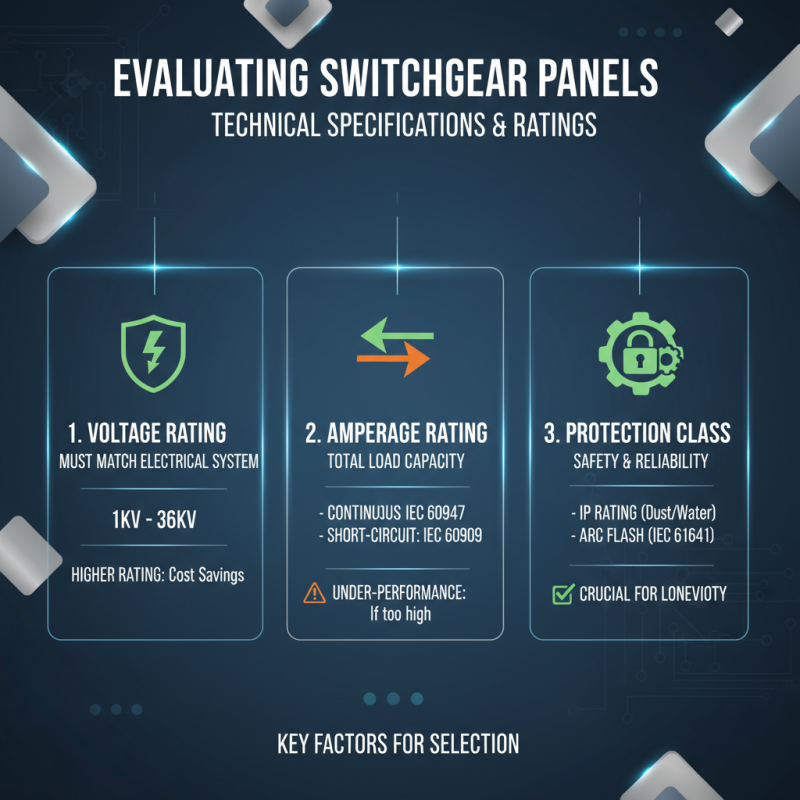
When selecting a switchgear panel, evaluating technical specifications and ratings is crucial. The voltage rating must match the electrical system. Common voltage ratings range from 1kV to 36kV. Choosing a rating higher than necessary can save costs in the long run but may lead to underperformance issues.
Short-circuit ratings are another key factor. These ratings, typically expressed in kA, indicate the panel’s ability to withstand short circuit conditions. According to industry reports, a panel may need to handle short-circuit currents up to 50 kA depending on the application. Inadequate ratings can lead to catastrophic failures. This underscores the need for proper calculations during the selection process.
Temperature ratings also play a vital role in switchgear performance. Most panels are rated for operation between -30°C to +50°C. However, operating outside these limits can reduce efficiency and lifespan. Regular monitoring is essential to ensure the environment remains within acceptable limits. Understanding these technical specifications is critical to selecting the right switchgear panel, influencing safety, reliability, and overall system performance.
Analyzing Cost and Efficiency in Choosing the Right Switchgear Panel
Choosing the right switchgear panel for your electrical system demands careful consideration of cost and efficiency. A well-selected panel can enhance the reliability of your electrical infrastructure while optimizing energy consumption. Understanding your specific needs is crucial. Different setups may require varying capacities and features.
Tip: Evaluate your electrical load before making a decision. An accurate assessment ensures efficiency and cost-effectiveness. Overestimating your needs can lead to unnecessary expenses. On the other hand, underestimating may lead to equipment failures.
When analyzing cost, consider not just the purchase price but also installation and maintenance expenses. A cheaper panel might require frequent repairs, ultimately increasing long-term costs. Investing in quality switchgear might seem expensive initially, but it promises durability and efficiency over time.
Tip: Consult with professionals who understand local regulations and technology trends. Their expertise can help avoid pitfalls. Market research shows that many users regret skipping this advice, ending up with subpar choices. Reliability is key; don't overlook the long-term benefits of a trusted panel.






 Claire
 Mr.Fu
Mr.Fu

 Claire