Top 10 Tips for Choosing the Right Air Circuit Breaker for Your Needs
In the world of electrical engineering, selecting the appropriate Air Circuit Breaker (ACB) can be a daunting task, given the multitude of options available. Expert John Smith, a leading authority in electrical safety, emphasizes the importance of making an informed choice: "The right Air Circuit Breaker is not just a safety device; it is the backbone of a reliable electrical system." This statement underscores the critical role that ACBs play in ensuring the safety and efficiency of electrical installations.
When navigating the selection process for an Air Circuit Breaker, it is essential to consider factors such as voltage levels, current ratings, and the specific applications for which the ACB will be used. Each component of the circuit, from the load it handles to the environment it operates in, influences the decision-making process. Understanding these nuances can significantly impact the performance and longevity of your electrical infrastructure.
As we delve into the top 10 tips for choosing the right Air Circuit Breaker for your needs, we will explore practical considerations and expert insights that will equip you with the knowledge required to make the best choice. Whether for industrial or commercial applications, selecting the appropriate ACB is crucial in maintaining safety and operational efficiency.

Understanding the Basics of Air Circuit Breakers
Air circuit breakers (ACBs) are crucial for protecting electrical circuits from overloads and short circuits. Understanding the basics of these devices is essential for making informed decisions when selecting the right ACB for specific applications. Typically, ACBs use air as the medium for arc quenching, offering reliable performance in various industries. According to industry reports, the global air circuit breaker market is expected to grow at a CAGR of 5.2% between 2023 and 2030, reflecting the increasing demand for efficient energy solutions.
When selecting an ACB, consider the circuit's current ratings and voltage requirements. The device should be rated adequately to handle the expected load while providing sufficient protection. It is also important to evaluate the installation environment since factors like humidity, temperature, and dust can affect the performance and lifespan of the breaker. Tips for choosing the right ACB may include assessing the specific application needs, such as whether the circuit will operate under variable loads or conditions where frequent interruptions may disrupt operations.
Another critical aspect is the ACB's trip mechanism, which can vary significantly in technology. Some models utilize thermal magnetic trips, while others may offer electronic trip settings for enhanced precision. By understanding these differences, you can better match the ACB specifications to your operational requirements. Incorporating these considerations into your selection process will ensure that you enhance safety and reliability in your electrical systems.
Top 10 Tips for Choosing the Right Air Circuit Breaker
Identifying Your Electrical Load Requirements
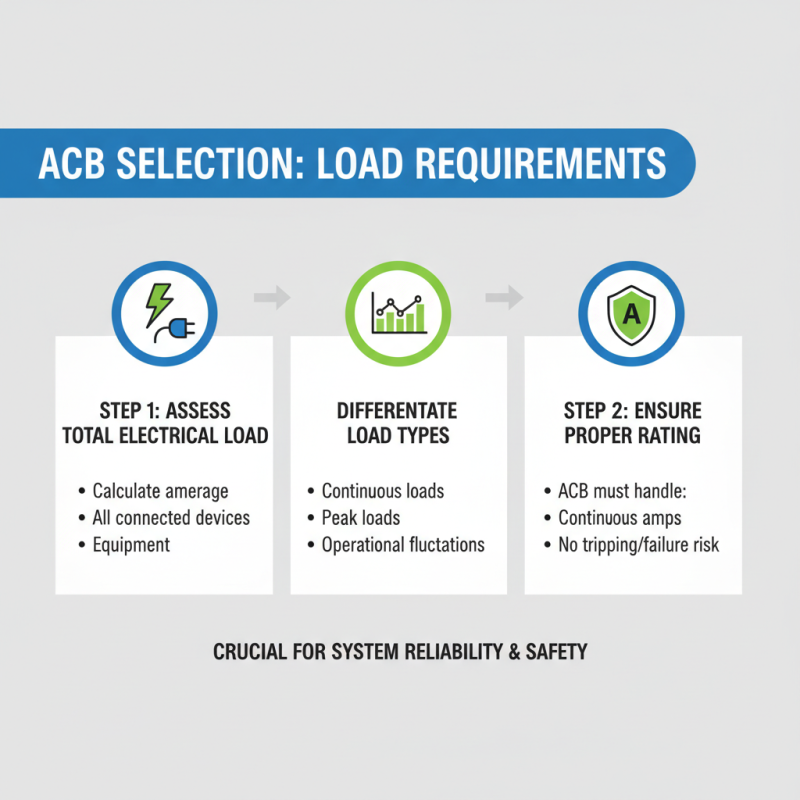
When selecting the right air circuit breaker (ACB) for your electrical system, understanding your load requirements is crucial. The first step in this process is to assess the total electrical load that your system will support. This involves calculating the amperage required by all connected devices and equipment, taking into account both the continuous and peak loads that may occur during operation. Properly identifying these figures ensures that the ACB can handle the demands of your electrical system without risk of tripping or failure.
Further, it is important to consider any future expansions or additional loads that may be added to your system. This foresight helps in choosing a breaker with appropriate margins, accommodating growth without necessitating immediate replacement or upgrades. Additionally, understanding the nature of your load—whether it consists of resistive, inductive, or a mix—will influence the selection of an ACB that can effectively handle the specific characteristics of your electrical demands. By thoroughly evaluating these aspects, you can ensure that you choose an air circuit breaker that is not only adequate for your current needs but also resilient enough to support future growth.
Evaluating Environmental Conditions and Installation Space
When selecting the right air circuit breaker (ACB), understanding environmental conditions and installation space is crucial for optimal performance and reliability. According to a report from the International Electrotechnical Commission (IEC), approximately 30% of electrical failures are linked to inappropriate installations affected by environmental factors. Conditions such as humidity, temperature variations, and the presence of corrosive agents can significantly influence the choice of an ACB. For instance, a breaker selected for a coastal environment with high salt exposure should have a higher IP (Ingress Protection) rating to withstand corrosion, whereas a breaker for a dry, stable environment might not require such robust protection.
Moreover, installation space is another essential consideration. The National Fire Protection Association (NFPA) guidelines recommend specific clearance and spacing requirements for circuit breakers to ensure adequate ventilation and heat dissipation. If the ACB is to be installed in a confined space, manufacturers often provide models designed with compact dimensions and enhanced thermal management features. In fact, a study by the Electric Power Research Institute (EPRI) highlights that improper installation space can increase the risk of overheating and reduce the overall lifespan of circuit breakers by up to 40%.
Evaluating both environmental conditions and installation space will not only enhance safety and performance but also extend the product's durability, ensuring a more reliable electrical system.
Selecting the Right Ratings and Specifications
When selecting the right air circuit breaker (ACB) for your specific electrical installation, understanding the appropriate ratings and specifications is crucial. The first step is to determine the rated current required for your application. This rating should match or exceed the maximum load the circuit will carry under normal operating conditions. Proper sizing is essential to prevent nuisance tripping while ensuring safety and reliability in protecting the electrical system.
Additionally, consider the voltage rating of the ACB, which must align with the voltage of your system. An inappropriate voltage rating can lead to equipment failure or safety hazards. Insulating properties, such as the insulation resistance and dielectric strength, are also important when selecting breakers for environments with varying humidity or industrial conditions. Furthermore, pay attention to the breaking capacity of the ACB, which indicates its ability to interrupt fault currents safely. By carefully evaluating these ratings and specifications, users can ensure optimal performance and protection for their electrical systems.
Top 10 Tips for Choosing the Right Air Circuit Breaker for Your Needs
| Tip No. |
Tip Description |
Considerations |
Importance Level |
| 1 |
Determine the Load Current |
Calculate based on total equipment load |
High |
| 2 |
Understand Short-Circuit Ratings |
Specify the interrupting capacity required |
Critical |
| 3 |
Select the Type of Breaker |
Choose between thermal, magnetic, or electronic |
Medium |
| 4 |
Check Environmental Conditions |
Assess temperature, humidity, and dust |
High |
| 5 |
Evaluate Installation Space |
Ensure ample room for the unit and wiring |
Medium |
| 6 |
Consider Future Expansion |
Account for potential load increases |
Medium |
| 7 |
Review Safety Standards |
Ensure compliance with local regulations |
Critical |
| 8 |
Assess Maintenance Needs |
Determine ease of maintenance and access |
Medium |
| 9 |
Explore Additional Features |
Look for monitoring and remote options |
Low |
| 10 |
Consult with Professionals |
Seek advice from electrical engineers |
High |
Comparing Features and Pricing Options for Breakers
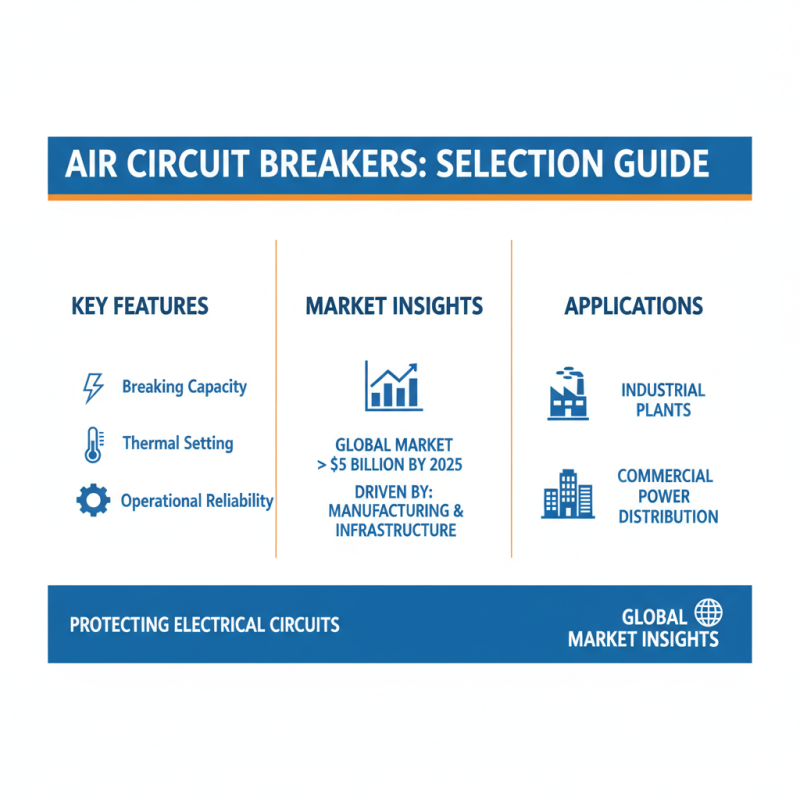
When selecting the right air circuit breaker (ACB) for your applications, understanding the features and pricing options is crucial. ACBs serve as essential safety devices, protecting electrical circuits from overloads and short circuits. According to a recent market analysis by Global Market Insights, the global air circuit breaker market is projected to reach over $5 billion by 2025, driven by increasing demand in industries such as manufacturing and infrastructure development. Understanding the features of these devices, such as breaking capacity, thermal setting, and operational reliability, can help in making an informed choice.
One important aspect to consider is the breaking capacity, which determines how much fault current the breaker can interrupt without failure. Higher breaking capacities generally come at a premium, but they are necessary for high-load applications. Additionally, the pricing structures often vary based on the technology used—integrated digital monitoring or traditional electromagnet designs. As highlighted in the Electrical Engineering Journal, investing in smarter technologies can lead to costly long-term savings by reducing maintenance and downtime.
When choosing an ACB, make sure to assess your specific needs against the features offered. For instance, consider energy efficiency ratings, which are gaining traction in industrial applications as a means to comply with sustainability standards. Furthermore, efficiency-oriented ACBs can reduce operational costs, making them a wise long-term investment. Equally, compare pricing options across different suppliers to find solutions that cater to your operational requirements without overshooting your budget.





 Claire
 Mr.Fu
Mr.Fu

 Claire