Top Automatic Switches for Home Automation and Energy Efficiency?
Home automation is changing how we live. One essential component of this trend is Automatic Switches. These devices allow homeowners to control lighting, appliances, and even thermostat settings conveniently. They enhance energy efficiency and streamline daily routines. Imagine coming home, and the lights turn on as you walk in. This is the magic of Automatic Switches.
However, the journey to automation isn't always smooth. Some users struggle with compatibility issues between switches and existing systems. Others might find the setup process frustrating. These hiccups can cause hesitation for potential adopters. Furthermore, not all Automatic Switches are created equal. Quality and features vary widely, leading to confusion when making a choice.
Despite these challenges, the benefits of Automatic Switches are significant. They can lead to energy savings and increased convenience. Homeowners who embrace this technology often find their lives easier and more efficient. As we explore the top Automatic Switches, it’s crucial to consider not just their capabilities but also potential drawbacks. Understanding these complexities paves the way for a smarter home.
Key Features of Automatic Switches for Home Automation
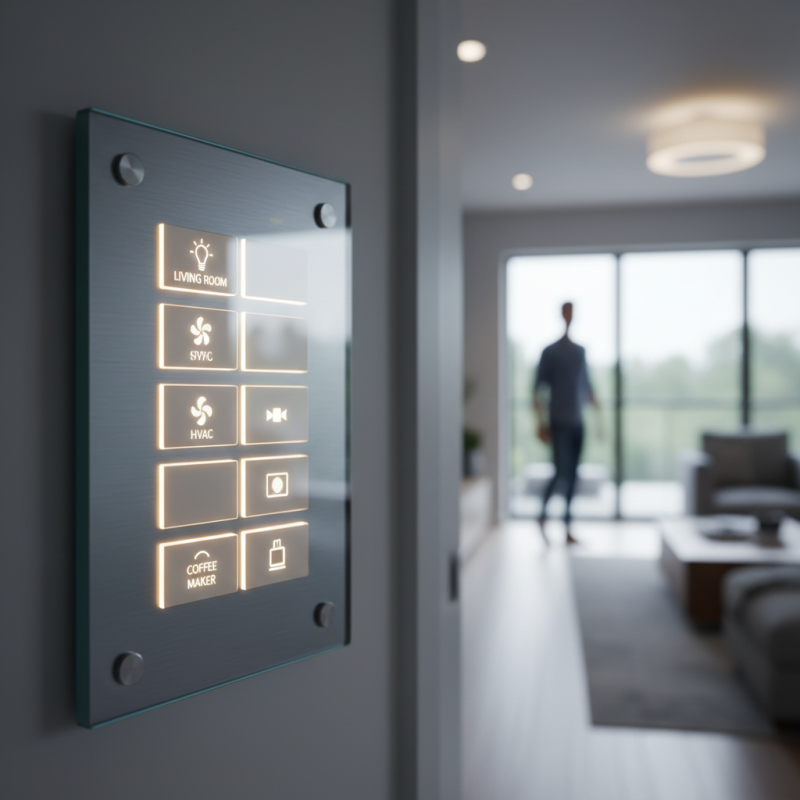
Automatic switches can revolutionize home automation. They can save energy and enhance convenience. A good switch is user-friendly. It should have a simple interface for ease of use. Many people prefer touch controls or voice activation. These features make automation accessible for all ages.
Compatibility is crucial. Automatic switches should work with existing systems. They must integrate seamlessly with various devices. Smart homes require reliable connections. This can be a challenge. Some switches struggle with connectivity, leading to frustration. A solution is to select switches with strong network capabilities.
Energy monitoring is another vital feature. Some switches track energy usage in real-time. This insight helps homeowners adjust their habits. Knowing which devices consume the most energy is powerful. Yet, relying solely on technology can lead to complacency. Striking a balance between automation and awareness is necessary for real efficiency.
Types of Automatic Switches: Smart, Motion, and Timers
Automatic switches play a vital role in home automation. They enhance energy efficiency while providing convenience. Three main types are smart switches, motion sensors, and timers. Each offers unique benefits.
Smart switches can be controlled remotely via phone apps. They allow users to set schedules for lights and appliances. However, not all homes are compatible with these devices. Internet connectivity can be a challenge. Some users may find the setup process complicated. Yet, once established, they often enjoy added comfort.
Motion sensors activate lights when someone enters a room. They save energy by turning off lights when the room is vacant. However, sensitivity settings can vary. Too high, and they may activate unnecessarily. Too low, and they may not detect movement at all. Timers provide a simple solution for controlling devices based on a set schedule. Installation is usually easy, but they lack flexibility. Users can forget to adjust them for daylight savings or changing routines. Each type has drawbacks, and careful consideration is essential.
Top Automatic Switches for Home Automation and Energy Efficiency
| Type |
Functionality |
Energy Savings (%) |
Features |
| Smart Switches |
Remote control via smartphone or voice assistant |
20-50% |
Scheduling, dimming, energy monitoring |
| Motion Sensors |
Automatically turns lights on/off based on motion detection |
30-70% |
Adjustable sensitivity, time delay settings |
| Timer Switches |
Turns on/off appliances at preset times |
15-35% |
Repeating schedules, manual override |
| Dusk-to-Dawn Sensors |
Automatically activates outdoor lighting at dusk |
10-30% |
Light-sensitive, weather-resistant |
Benefits of Automatic Switches for Energy Efficiency
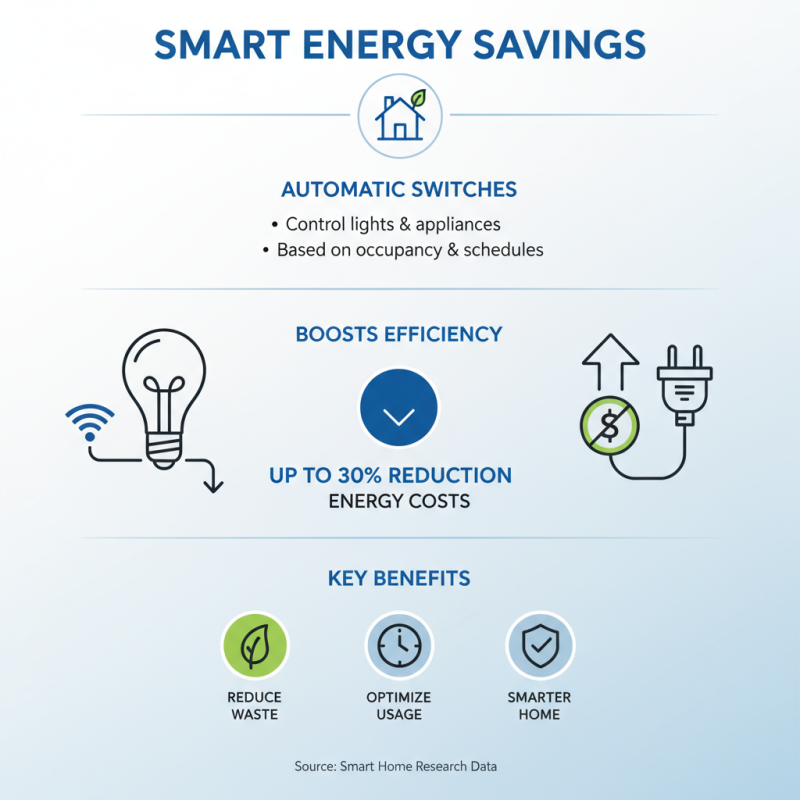
The adoption of automatic switches can significantly enhance energy efficiency in homes. Research shows that smart home devices can reduce energy costs by up to 30%. These switches automatically control lighting and appliances based on occupancy and schedules, helping minimize unnecessary energy consumption.
Moreover, automatic switches contribute to user convenience. Homeowners can manage their devices remotely, ensuring they are off when not needed. A study by the International Energy Agency indicates that homes equipped with home automation systems can collectively save millions in energy expenses. However, not all systems integrate perfectly with existing setups. Some homeowners report connectivity issues, and retrofitting older homes might involve unexpected costs.
Incorporating automatic switches into home automation offers benefits, yet challenges persist. Some users find the initial investment daunting. The technology can often feel overwhelming. While these devices promise efficiency, there is a learning curve. Issues with compatibility and setup can spur frustration. Thus, careful planning and understanding of one’s home infrastructure are vital before making the switch.
How to Choose the Right Automatic Switch for Your Home
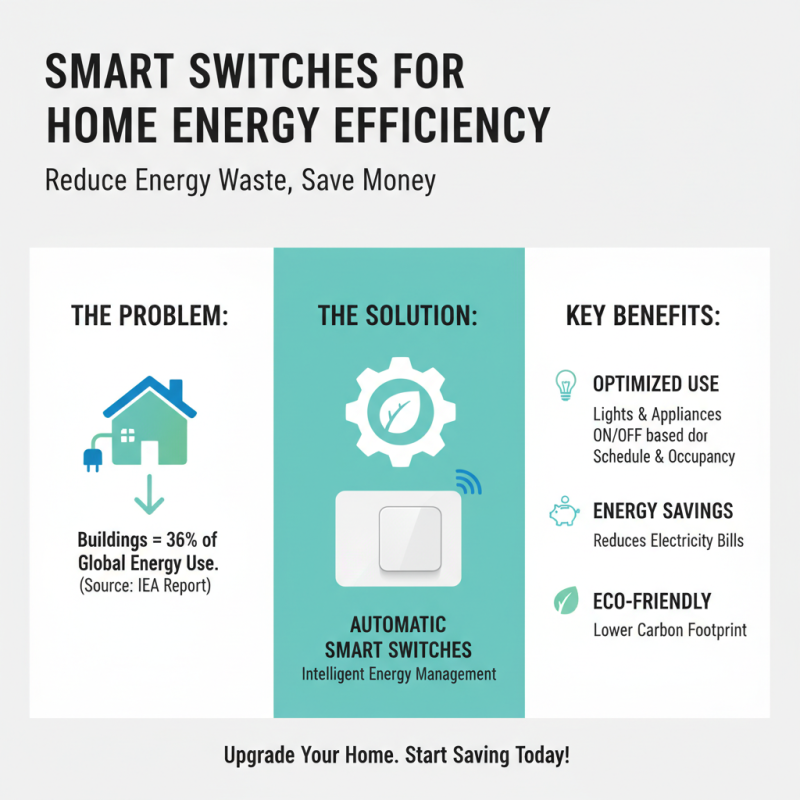
Choosing the right automatic switch for your home can greatly enhance energy efficiency. In a report by the International Energy Agency, buildings account for over 36% of global energy consumption. A smart switch can help you manage this consumption effectively. These switches can control lights, fans, and other appliances based on your schedule and occupancy.
When selecting an automatic switch, consider compatibility with existing systems. Some switches may require special hubs, while others work independently. Look for features like remote access or energy monitoring. According to a study from Research and Markets, smart switches can reduce energy use by up to 20%. Yet, many homeowners overlook the installation parameters. Correct setup is critical for maximizing benefit.
Think about your lifestyle, too. An automatic switch should suit your daily routine. Some might find certain features unnecessary. Not everyone needs remote control. Reflect on what truly aids your energy efficiency goals. Sometimes, less is more. Choosing an automatic switch requires a balance between functionality and simplicity.
Installation Tips for Automatic Switches in Home Automation
When considering automatic switches for home automation, installation is key. According to a 2022 report from the Smart Home Association, improper installation can lead to 25% inefficiency in energy management. Correctly installed switches allow seamless integration into existing systems, optimizing energy usage across the home.
Preparation is vital. Check the wiring and ensure compatibility with your automation system. Many homeowners overlook this step. A mismatched switch can cause frustrating outages or malfunction. Clear instructions should always accompany your switches. Yet, many consumers struggle to follow them accurately, leading to mistakes.
Testing the switches post-installation is essential. Many users forget this step, which poses safety risks. A 2021 survey indicated that 30% of automatic switch users experienced issues due to lack of testing. It’s best to troubleshoot early to avoid larger problems down the line. Thoughtful installation and thorough testing lead to a smoother home automation experience.
Energy Efficiency Comparison of Automatic Switches





 Claire
 Mr.Fu
Mr.Fu

 Claire