What is Gas Insulated Switchgear and How Does it Benefit Your Power System?
Gas Insulated Switchgear (GIS) is transforming modern power systems. It offers a compact alternative to traditional air-insulated switchgear. By using gas as an insulating medium, GIS enhances safety and efficiency in energy management.
The benefits of Gas Insulated Switchgear extend beyond space-saving designs. It provides superior reliability, even in harsh environments. GIS systems are less prone to faults, reducing maintenance costs significantly. Utilities can depend on them for consistent power delivery.
Yet, as with any technology, GIS has its limitations. The initial investment can be high, posing challenges for some organizations. Understanding these dynamics is crucial for making informed decisions. Exploring the intricacies of Gas Insulated Switchgear reveals its potential to revolutionize power distribution and ensure sustainable energy solutions.
What is Gas Insulated Switchgear?
Gas Insulated Switchgear (GIS) refers to electrical equipment that uses gas to insulate its components. This technology is changing how power systems function. In GIS, sulfur hexafluoride (SF6) is commonly used due to its excellent insulating properties. It allows for compact designs that save space.
One major benefit of GIS is its reliability. Unlike traditional switchgear, GIS is less vulnerable to environmental factors. It can withstand harsh weather, such as heavy rain or snow. GIS is also safer, reducing the risk of electrical faults. With fewer air exposure points, maintenance becomes less frequent, although some issues can still arise.
However, GIS is not without its challenges. The initial investment is higher compared to conventional systems. Additionally, while SF6 is effective, it has a high global warming potential. Users must consider these factors carefully. Addressing these concerns ensures informed decisions when integrating GIS into power systems. The future of energy management relies on finding a balance between innovation and responsibility.
What is Gas Insulated Switchgear and How Does it Benefit Your Power System?
| Dimension |
Details |
| Definition |
Gas Insulated Switchgear (GIS) is a high-voltage electrical switchgear that uses a gas, typically sulfur hexafluoride (SF6), as the insulating medium. |
| Applications |
Used in substations, power plants, and industrial facilities to manage high-voltage electricity. |
| Advantages |
Space-saving, increased reliability, lower environmental impact, reduced maintenance costs. |
| Disadvantages |
Higher initial cost, potential environmental concerns related to SF6 gas leakage. |
| Insulating Medium |
Sulfur hexafluoride (SF6) gas, which has excellent dielectric properties. |
| Typical Voltage Levels |
From 72.5 kV up to 800 kV and above. |
| Market Trends |
Increasing deployment in urban areas and renewable energy integration. |
Key Components of Gas Insulated Switchgear
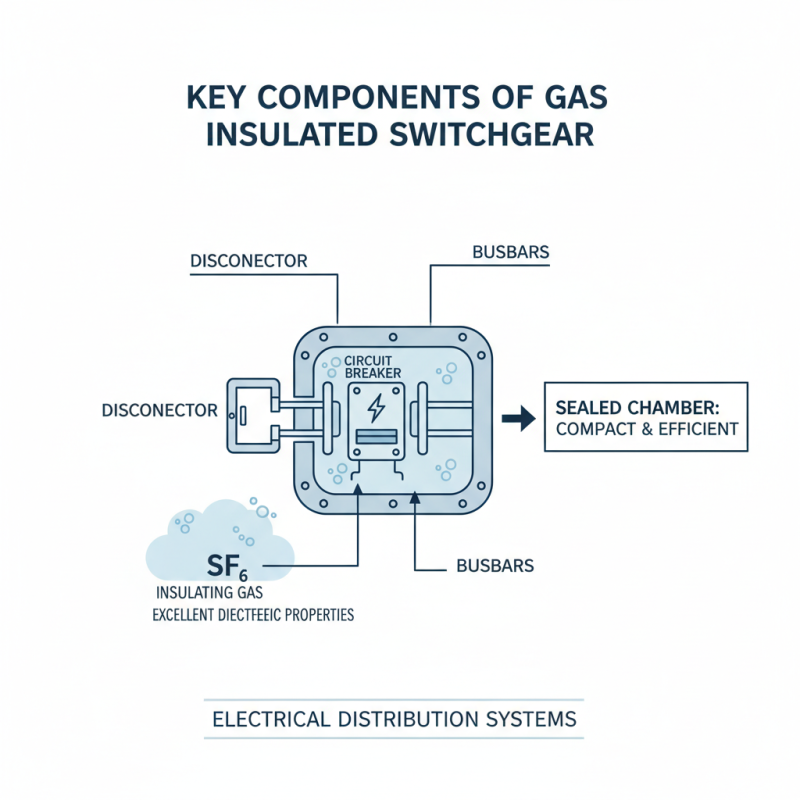
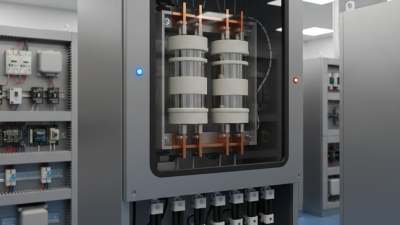
Gas Insulated Switchgear (GIS) is a compact and efficient solution for electrical distribution systems. Its design includes several key components that enhance performance. The main features consist of circuit breakers, disconnectors, and busbars, all housed in a sealed chamber filled with insulating gas, typically SF6. This gas has excellent dielectric properties, making it highly effective in preventing electrical discharges.
The circuit breakers are vital for interrupting fault currents. They provide protection by automatically disconnecting the system during abnormalities. Disconnectors play a crucial role in isolating sections of the system for maintenance. This ensures safety while performing repairs. Busbars serve as the main conductive path to distribute power efficiently. Their design minimizes energy loss, which benefits overall system performance.
Despite their advantages, GIS systems are not without challenges. Maintenance can be complex due to the enclosed design, requiring skilled technicians. The cost of initial installation and components can also be a concern. These factors should be evaluated when deciding on the use of GIS. Understanding these components and their functions helps to maximize the benefits while acknowledging potential drawbacks.
Advantages of Using Gas Insulated Switchgear in Power Systems
Gas Insulated Switchgear (GIS) enhances the efficiency and reliability of power systems. Unlike traditional air-insulated switchgear, GIS uses gas for insulation, making it compact and versatile. This compactness is especially beneficial in urban areas where space is limited. It allows for the placement of critical equipment close to load centers, reducing transmission losses.
One of the significant advantages is reduced maintenance. GIS requires less upkeep due to its sealed environment, which protects components from environmental factors. This leads to reduced downtime. Also, GIS systems operate with lower operational risks. Yet, the initial installation costs can be high, which may deter some projects. Decision-makers must weigh long-term savings against upfront investment.
In terms of safety, GIS reduces exposure to electrical hazards. The gas insulation minimizes potential arcs and shorts. However, some still express concerns about the environmental impact of certain gases used in GIS. Continuous advancements are necessary to address these issues. Investment in research is crucial for environmental safety without compromising performance. Each project needs to evaluate specific needs and challenges before integrating this technology.
Application Areas for Gas Insulated Switchgear
Gas Insulated Switchgear (GIS) is gaining traction across various sectors. Its compact design makes it ideal for urban areas and space-constrained environments. This technology also thrives in high-voltage applications, offering reliability and safety. However, it may have a higher initial cost compared to traditional switchgear. This is worth considering for organizations with limited budgets.
Infrastructure development is one major field employing GIS. In cities where space is a premium, the efficiency of GIS shines. Utilities can manage power effectively without occupying excessive land. Another application area is renewable energy integration. With the rise of wind and solar power, GIS facilitates smoother transitions between different energy sources. It allows for the seamless handling of varying load demands.
A challenge exists with maintenance. While GIS is generally low-maintenance, skilled personnel are crucial for inspections and repairs. Ensuring that staff are adequately trained can be an ongoing issue. In remote areas, accessibility can also pose risks. Having a reliable power system is crucial. GIS provides solutions, but attention to training and management is essential. The potential benefits are significant, yet organizations must weigh these factors.
Maintenance and Safety Considerations for Gas Insulated Switchgear
Gas Insulated Switchgear (GIS) is a modern solution for power distribution. It uses gas, such as SF6, for insulation. This design reduces space requirements and enhances safety. However, maintenance remains critical. Regular checks ensure all components function smoothly. Maintenance avoids unexpected downtime and costly repairs.
Understanding the safety considerations is essential. GIS systems operate under high pressure. This aspect requires trained personnel. Parameters need constant monitoring. Potential leaks, though rare, can pose risks. Effective training programs can prepare teams for rapid response to any issues.
Documentation is key. Keeping comprehensive logs helps track performance. This practice reveals patterns over time. Any trends in malfunction should be investigated. Periodic audits can uncover areas needing improvement. Although GIS offers many benefits, proper management is vital for longevity and reliability.







 Claire
 Mr.Fu
Mr.Fu

 Claire