How to Design an Efficient Electrical Substation for Modern Infrastructure?
Designing an efficient Electrical Substation is crucial for modern infrastructure. As energy demands grow, so must our approach to substations. Dr. Amelia Carter, a renowned electrical engineer, states, “An optimized Electrical Substation shapes the backbone of smart cities.” This highlights the importance of innovative designs.
Modern substations require a blend of technology and functionality. Incorporating advanced materials can improve efficiency and safety. In recent years, we have seen substations integrate AI and smart technologies. These advancements promise to enhance energy distribution. However, challenges remain.
There is a risk of underestimating the impact of human factors in design. The complexity of needs can lead to oversights. Effective communication between stakeholders is essential. Ensuring every detail is considered is critical for success. We must remember that an Electrical Substation is not just a structure; it is integral to the future of our urban landscapes.
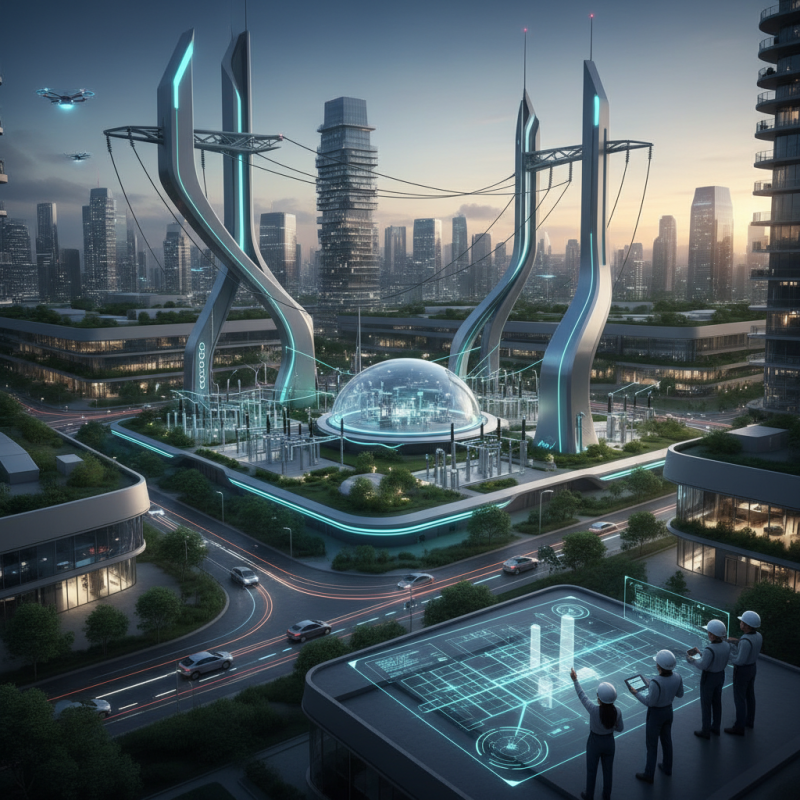
Understanding the Role of Electrical Substations in Modern Infrastructure
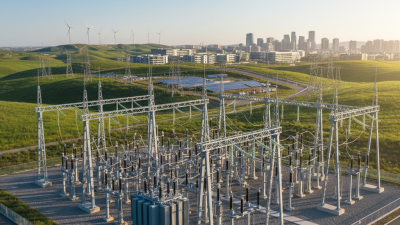
Electrical substations serve as critical components in modern infrastructure. They facilitate the transformation of voltage levels to distribute electricity efficiently. According to the International Energy Agency, investment in substations is pivotal for enhancing grid resilience. Modern substations are designed to meet the growing demand for power while ensuring reliability and safety.
Tip: Integrating smart technologies, such as sensors and data analytics, can enhance monitoring and maintenance.
The role of electrical substations extends beyond power distribution. They contribute to the stability of electrical grids, especially amid renewable energy growth. Research shows that renewable energy sources will account for 50% of electricity generation by 2030. Effective substation design is essential to handle this dynamic shift, yet many facilities still rely on outdated models.
Tip: Regular performance assessments can help identify inefficiencies.
Despite advancements, challenges remain. Aging infrastructures often lead to increased maintenance costs and outages. Ensuring that substations are equipped for future demands requires ongoing evaluation and investment. They must keep pace with technology and regulatory changes, which is often neglected. Embracing innovation can lead to a more sustainable and efficient future in electrical substations.
Energy Consumption in Electrical Substations
This chart illustrates the energy consumption of different components in electrical substations, highlighting the significance of resource management in modern infrastructure.
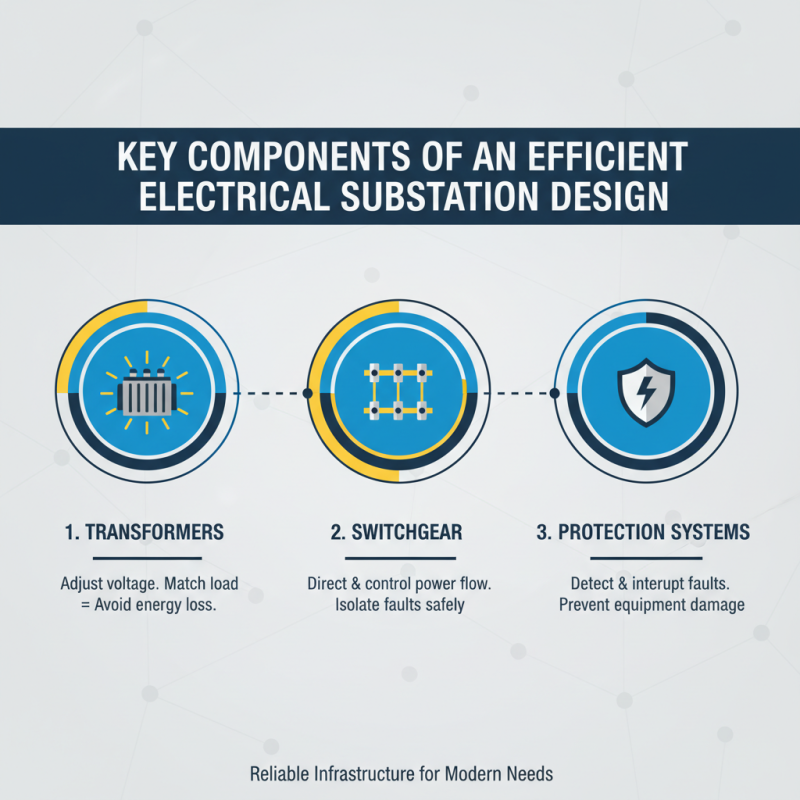
Key Components of an Efficient Electrical Substation Design
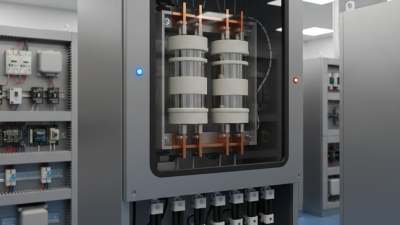
Designing an efficient electrical substation is crucial for modern infrastructure. Key components include transformers, switchgear, and protection systems. Transformers adjust voltage levels, ensuring electricity is safely transmitted over distances. Select transformers that match load requirements precisely to avoid energy loss.
Switchgear manages electrical flow and isolates faults. It is critical for operational reliability. Choose switchgear that is compact but robust. Keep maintenance in mind; easier access can save time and reduce costs. Engineers often overlook the importance of adequate spacing around switchgear, leading to operational challenges.
Protection systems are vital for safety. They detect faults and prevent damage. Implement a modern relay system that offers rapid response times. Many designers miss out on integrating smart technology, which can enhance monitoring capabilities. This oversight can lead to delayed responses during emergencies.
Tips: Regularly assess your design layout for efficiency. Engage with field operators for practical insights. A fresh perspective can illuminate issues often missed during initial design phases.
Incorporating Smart Technologies for Enhanced Operational Efficiency
Modern electrical substations need to embrace smart technologies. These innovations enhance operational efficiency and reduce costs. Automation plays a significant role in this transformation. It allows for real-time monitoring of equipment and systems, which can prevent failures.
Smart sensors and IoT devices gather vital data from various points. They provide insights into performance and energy consumption. This data must be analyzed effectively. However, the integration process can be complex. There are often challenges in standardization and interoperability that need attention.
Implementing advanced analytics is crucial. It helps in predicting maintenance needs, though not all data is useful right away. Some information may require filtering and fine-tuning. As these technologies evolve, constant evaluation is essential. Stakeholders must adapt to changing needs in infrastructure and energy demands.
Ensuring Safety and Reliability in Substation Design Standards
When designing an electrical substation, safety and reliability are key. Standards dictate that all components must withstand harsh conditions. For instance, circuit breakers should be designed to operate flawlessly in extreme weather. Proper spacing between equipment is essential to prevent overheating. Insulation materials must meet high safety standards to avoid dangerous situations.
Incorporating redundancy into design is crucial. This means having backup systems for critical functions. However, many designs underestimate the complexity of these systems. Each added component increases maintenance requirements. Regular inspections can be easily overlooked in busy operations.
Visual indicators can enhance safety. Brightly colored labels help operators identify various parts quickly. However, not all facilities implement effective signage. This can lead to confusion. Incorporating user feedback may improve design flaws. The human element in substation operations should not be underestimated. Proper training is often neglected but is vital for safe operation.
Analyzing Energy Demand Projections for Optimal Substation Capacity
As urban areas expand, the demand for electricity rises sharply. Projections indicate that global energy demand will increase by about 30% between 2020 and 2040. This surge necessitates an efficient design for electrical substations, critical for balancing supply and demand. Accurately estimating future energy needs is essential for determining the appropriate capacity of these facilities.
Many factors influence energy demand. Residential, industrial, and commercial sectors contribute variably to this growth. Reports show residential energy consumption could climb by 15% in major cities. Meanwhile, industrial usage is expected to rise by 20%, driven by electrification and new technologies. This mixed demand highlights the urgency for optimizing substation capacity.
Substations must be scalable yet adaptable. Aging infrastructure poses challenges, as they were often designed for past demand patterns. A rigid design can lead to inadequate capacity during peak periods. Additionally, climate change impacts can make demand projections uncertain. Therefore, incorporating smart grid technologies into substation designs may help address these potential pitfalls. Embracing innovative solutions can enhance resilience against these evolving challenges.






 Claire
 Mr.Fu
Mr.Fu

 Claire