How to Choose the Right Vacuum Circuit Breaker for Your Electrical System
In the ever-evolving world of electrical systems, the importance of selecting the right Vacuum Circuit Breaker (Vacuum Ckt Breaker) cannot be overstated. According to John Smith, a respected expert in the field of electrical engineering, "Choosing the right Vacuum Ckt Breaker can significantly enhance the safety and efficiency of an electrical system." His perspective emphasizes the pivotal role that these breakers play in protecting circuits from overloads and short circuits, thereby preventing potential failures and ensuring operational integrity.
As the demand for reliable electrical systems continues to grow, professionals face the critical challenge of navigating the various options available in the market. A Vacuum Ckt Breaker not only provides superior performance due to its unique operational principles but also offers advantages such as compact size and low maintenance needs. As such, understanding the factors that influence the selection of an appropriate Vacuum Ckt Breaker is essential for engineers and decision-makers alike.
In this guide, we will explore key considerations in choosing a Vacuum Ckt Breaker for your electrical system, including voltage ratings, interrupting capacity, and installation requirements, thus empowering you to make informed decisions that will ultimately enhance the reliability and effectiveness of your electrical infrastructure.

Factors to Consider When Selecting a Vacuum Circuit Breaker for Your System
When selecting a vacuum circuit breaker (VCB) for your electrical system, several critical factors must be taken into account to ensure optimal performance and safety. One primary consideration is the system voltage level. VCBs are designed to operate effectively in specific voltage ranges, so it is crucial to choose a breaker that matches your system’s specifications. Additionally, understanding the short-circuit rating of the VCB is essential, as this rating determines its ability to withstand and interrupt fault currents without sustaining damage.
Another vital factor is the operational environment where the VCB will be installed. Factors such as temperature, humidity, and potential exposure to contaminants can affect the performance and longevity of the breaker. Therefore, selecting a VCB with an appropriate IP rating and material construction suited for the environment is necessary.
Tips: Always consult with a qualified electrical engineer to determine the specific requirements of your system. Also, consider the maintenance and service life of the VCB; selecting a breaker that allows for easy maintenance can reduce downtime and operational costs in the long run. Finally, ensure that the chosen VCB complies with relevant safety standards to protect both personnel and equipment.
Understanding Voltage Ratings for Vacuum Circuit Breakers in Application
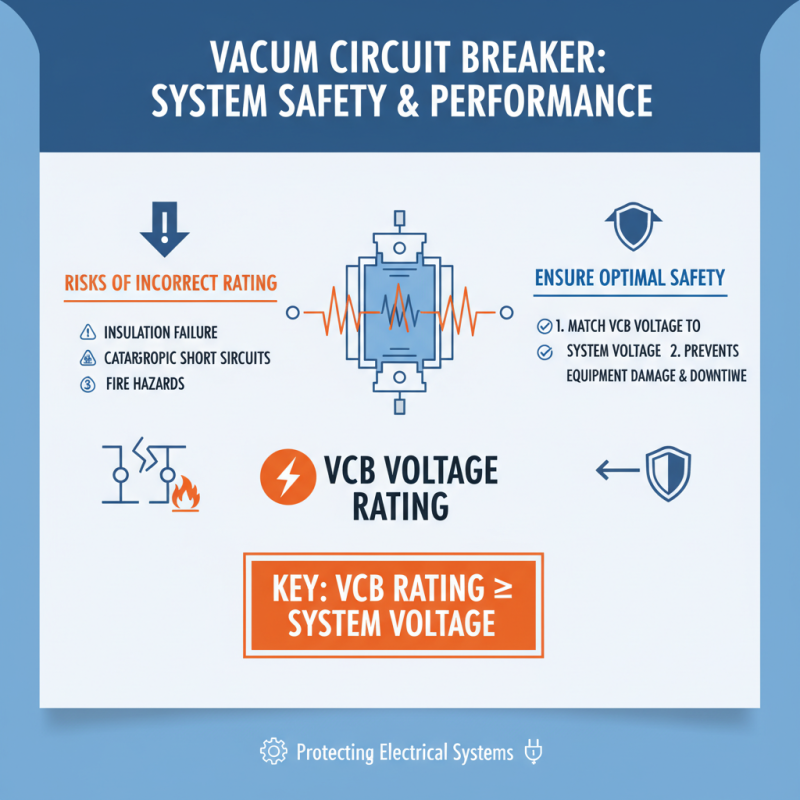
When selecting a vacuum circuit breaker (VCB) for your electrical system, understanding voltage ratings is crucial in ensuring optimal performance and safety. Voltage ratings indicate the maximum voltage that a breaker can handle without failing, and they are essential for matching the VCB to the system's operating conditions. For instance, a VCB with a voltage rating lower than the system voltage can lead to insulation failure, catastrophic short circuits, or even fire hazards. Therefore, it is vital to choose a circuit breaker that aligns with the voltage specifications of the electrical system it serves.
In practical applications, vacuum circuit breakers are available in various voltage ratings tailored for different environments, ranging from low to high voltage systems. For industrial and commercial settings, understanding the operational voltage range not only ensures compliance with regulatory standards but also enhances reliability and longevity of the equipment. Consideration should be given to transient voltages, as VCBs must be capable of interrupting fault currents while maintaining functionality under diverse conditions. In analyzing these factors, professionals can optimize the selection of a vacuum circuit breaker, providing efficient protection and minimizing risks associated with electrical faults.
The Importance of Short-Circuit Current Ratings in Circuit Breaker Selection
When selecting vacuum circuit breakers (VCBs) for electrical systems, one of the critical factors to consider is the short-circuit current rating (SCCR). The SCCR represents the maximum fault current that a circuit breaker can withstand and safely interrupt without failing or causing damage. According to the IEEE 141-1993 standard, known as the "Red Book," the SCCR is vital for ensuring the safety and reliability of electrical systems, especially in industrial settings where potential short-circuit conditions are prevalent. A mismatch between the SCCR and the system's actual fault currents can lead to catastrophic failures, including equipment damage and safety hazards.
Industry data shows that inadequate short-circuit ratings contribute to approximately 25% of electrical system failures, as highlighted in a report by the Electric Power Research Institute (EPRI) in 2021. This statistic underscores the importance of thorough calculations and assessments in determining the fault currents in specific applications. Engineers must analyze the prospective short-circuit currents that could occur in their installation, which can vary significantly based on factors such as generator capacity, transformer ratings, and system configurations. By selecting a VCB with an appropriate SCCR, operators can mitigate risks effectively, ensuring that the circuit breaker will perform as expected during a fault condition, maintain the integrity of the electrical system, and protect personnel from electrical hazards.
Ultimately, understanding short-circuit current ratings is essential for choosing the right vacuum circuit breaker. A well-selected VCB with adequate SCCR not only promotes operational efficiency but also aligns with industry safety standards, contributing to the longevity and reliability of electrical infrastructure.
Evaluating Environmental Conditions for Optimal Circuit Breaker Performance
When selecting a vacuum circuit breaker (VCB) for your electrical system, understanding the environmental conditions in which the breaker will operate is crucial for ensuring optimal performance. Factors such as temperature, humidity, dust levels, and altitude can significantly influence the effectiveness and reliability of the VCB. For instance, excessive humidity can lead to moisture accumulation, increasing the risk of insulation failure. In contrast, high temperature may affect the material properties of the components, leading to premature wear or failure. Therefore, evaluating the site's environmental conditions is essential before making a selection.
Another important consideration is the presence of pollutants or corrosive elements in the atmosphere. Locations with high levels of dust, chemicals, or salt can impact the VCB's longevity and functionality. In such environments, additional protective measures, such as sealing and advanced coatings, may be required to enhance durability. Furthermore, understanding the electrical load patterns and the potential for external disturbances—like lightning or magnetic interference—will help in choosing a circuit breaker that not only meets electrical requirements but can also withstand environmental challenges effectively.
Environmental Conditions Impacting Vacuum Circuit Breaker Performance
Comparing Maintenance and Lifespan of Different Vacuum Circuit Breakers
When selecting a vacuum circuit breaker (VCB) for your electrical system, understanding the maintenance requirements and lifespan of different models is crucial. VCBs are known for their reliability and low maintenance needs compared to traditional circuit breakers. The sealed vacuum environment in which the contacts operate eliminates the need for regular inspection and cleaning, thus reducing the overall maintenance efforts. However, some designs may still require periodic checks to ensure that the operating mechanisms function correctly, particularly in environments with high dust or moisture levels.
Lifespan is another critical factor to consider. Quality vacuum circuit breakers can offer operational longevity, often exceeding 10,000 close-open cycles. Factors that influence their longevity include the operating environment, frequency of use, and the quality of the installation. VCBs installed in harsher environments may experience a shortened lifespan due to increased wear on components. Therefore, it’s essential to assess not just the specifications of the circuit breaker but also the specific conditions of its application. By weighing these aspects, you can make a more informed decision that aligns with your system's needs and longevity requirements.
How to Choose the Right Vacuum Circuit Breaker for Your Electrical System
| Type |
Maintenance Frequency (Years) |
Lifespan (Years) |
Operational Voltage (kV) |
Typical Application |
| Standard VCB |
4-6 |
15-30 |
12-15 |
Industrial Applications |
| Compact VCB |
2-4 |
10-20 |
7.2-12 |
Commercial Buildings |
| Smart VCB |
3-5 |
18-25 |
15-24 |
Renewable Energy |
| Heavy Duty VCB |
5-7 |
20-35 |
15-36 |
Power Generation |





 Claire
 Mr.Fu
Mr.Fu

 Claire