How to Choose the Right Air Circuit Breaker for Your Needs?
Choosing the right Air Circuit Breaker (ACB) is crucial for modern electrical systems. In 2023, the global ACB market was valued at approximately $4.5 billion and is expected to grow steadily. This growth reflects the increasing demand for reliable protection in electrical circuits. ACBs play a vital role in safeguarding equipment against overloads and short circuits.
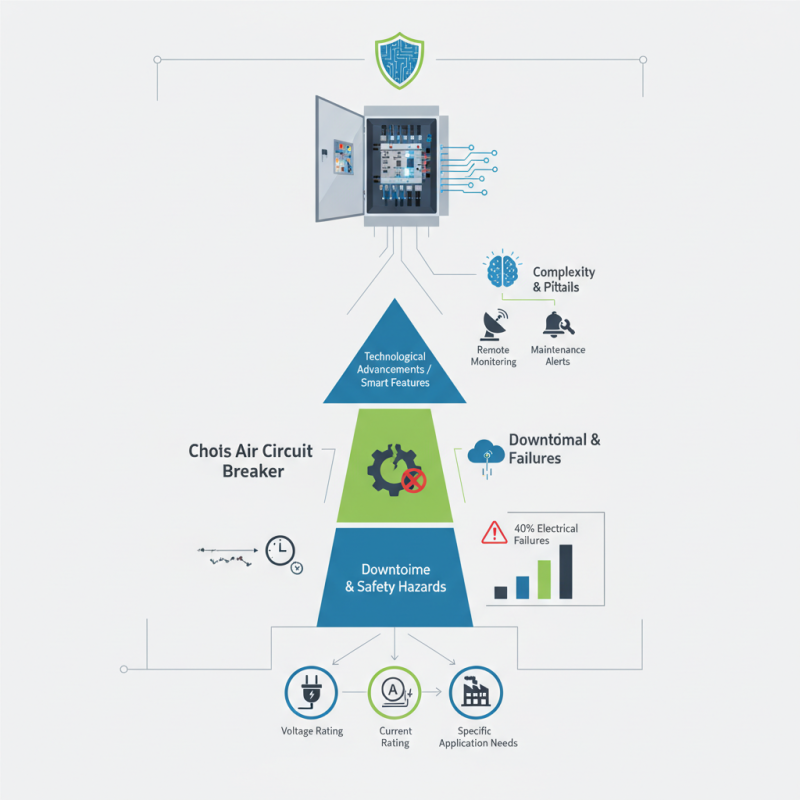
When selecting an ACB, consider factors like voltage rating, current rating, and specific application needs. According to industry reports, more than 40% of electrical failures stem from improper circuit protection. It's essential to tackle these challenges early. Misconfigurations can lead to costly downtime and safety hazards, which emphasizes careful selection.
Technological advancements now allow for smart features in ACBs. These innovations can include remote monitoring and maintenance alerts. While these features enhance safety, they also increase complexity. Users must be well-informed to avoid potential pitfalls in operation. The journey to finding the right Air Circuit Breaker demands careful analysis and a thorough understanding of electrical needs.
Understanding the Role of Air Circuit Breakers in Electrical Systems
Air circuit breakers play a vital role in electrical systems. They protect circuits from overloads and short circuits. When power surges occur, these breakers quickly interrupt the flow of electricity. This action prevents damage to wires and connected devices. Additionally, they help maintain safety standards in various applications.
Choosing the right air circuit breaker requires careful consideration. Factors such as voltage ratings, current capacity, and environmental conditions must be assessed. Selecting a breaker that can handle high fault currents is crucial. However, not all systems require the same specifications. A mismatch can lead to inefficiencies or, worse, system failures.
Understanding the specific needs of your system is essential. Take time to analyze your electrical load. Remember, over-specifying can increase costs unnecessarily. On the other hand, underestimating needs may lead to safety risks. Each choice has its consequences, and reflective thinking is key to finding balance.
Key Factors to Consider When Selecting an Air Circuit Breaker
When selecting an air circuit breaker, several key factors should be taken into account. The most important aspect is the current rating. This determines how much current the breaker can handle without tripping. If the rating is too low, the device may trip frequently. If it's too high, it may not protect the circuit effectively.
Another crucial factor is the short-circuit protection level. This indicates how well the breaker can handle sudden surges in current. Breakers with adjustable settings can provide flexibility but may require careful calibration. It's not uncommon for users to overlook this aspect, leading to costly equipment damage.
Consider the installation environment as well. Factors like temperature and humidity play a key role in the performance of an air circuit breaker. You might think your space is ideal, but hidden moisture can cause issues. Also, think about maintenance. Some breakers are easier to service than others, which can be a deciding factor for many users. Balancing all these elements can be challenging, but it is necessary for long-term reliability.
Evaluating Current Ratings and Interrupting Capacities for Your Needs
When selecting an air circuit breaker, it’s vital to evaluate the current ratings and interrupting capacities effectively. Understanding the current ratings helps ensure the breaker can handle the electrical load. Too low a rating can lead to frequent tripping. Conversely, a rating that’s too high may not provide adequate protection.
Consider your specific application carefully. For instance, commercial settings may require higher capacities, while residential setups may not. Analyzing the electrical demands is crucial in making the right choice.
**Tips:** Always check the equipment specifications. Knowing the precise amperage requirements will guide your selection. Moreover, consider the environment in which the circuit breaker will operate. Extreme conditions might affect performance.
Interrupting capacity is another critical factor. This defines the maximum fault current the breaker can handle without failure. Select a breaker that exceeds the maximum potential fault current. Failure to do so could result in dangerous situations.
**Tips:** Consult with a professional if you’re unsure. It’s better to ask than to risk safety. Remember, not all installations are perfect. Regular assessments of your system might reveal unseen issues.
How to Choose the Right Air Circuit Breaker for Your Needs? - Evaluating Current Ratings and Interrupting Capacities for Your Needs
| Current Rating (A) |
Interrupting Capacity (kA) |
Application Type |
Recommended Use |
| 15 |
10 |
Residential |
Small appliances and lighting |
| 30 |
16 |
Commercial |
Medium-sized equipment and lighting |
| 60 |
25 |
Industrial |
Larger machinery and industrial equipment |
| 100 |
35 |
Heavy Industrial |
Heavy machinery and high-load circuits |
| 200 |
50 |
Data Center |
Server and data processing equipment |
The Importance of Thermal and Magnetic Trip Characteristics
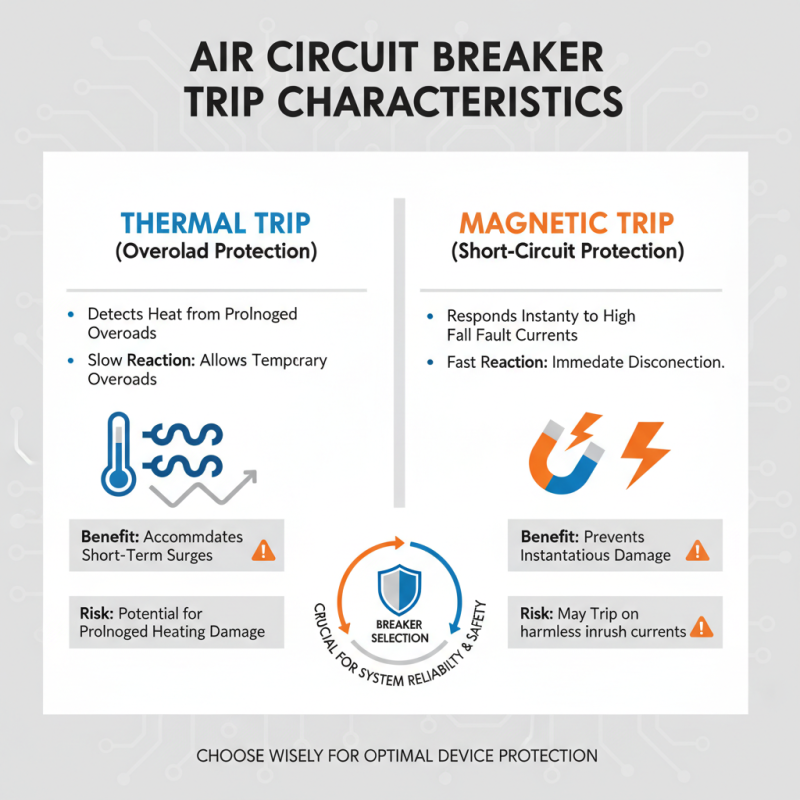
When selecting an air circuit breaker, understanding thermal and magnetic trip characteristics is crucial. Thermal trips protect against overloads by detecting heat. They react slowly, giving devices time to adjust to short-term overloads. This can be beneficial in temporary situations but might allow prolonged heating, risking damage.
Magnetic trips, on the other hand, react instantaneously to short circuits. They provide quick disconnection, preventing severe faults. However, this speed can be a double-edged sword. If the settings are not calibrated accurately, you may experience nuisance tripping. This can frustrate users, causing interruptions during critical operations.
Choosing the right combination is essential for your specific needs. An ideal balance between thermal and magnetic settings can protect equipment effectively. Consider consulting with professionals. The nuances in settings can lead to significant differences in performance. Be prepared for some trial and error. Learning from mistakes often leads to better outcomes in the future.
Assessing Environmental Conditions and Application-Specific Requirements
When choosing an air circuit breaker, understanding your environmental conditions is crucial. Temperature extremes can affect breaker performance. For instance, circuit breakers operating in high temperatures may experience increased wear. Studies indicate that thermal stress can lead to a 15% reduction in lifespan. In contrast, cold environments may cause components to contract, potentially leading to malfunction.
Application-specific requirements also play a significant role. Industrial settings often experience higher electrical loads. These settings require breakers that can handle short-circuit currents effectively. According to industry reports, failures in circuit breakers often occur due to inadequate specification for these loads. Moreover, factors like humidity or dust can impact performance. Breakers located in high-humidity areas might need additional sealing to safeguard against corrosion.
Reflecting on these details is essential for proper selection. Many users overlook the necessity of thorough assessments. Without considering the specific application and environment, there's a risk of malfunction. Properly evaluating these factors can lead to better performance and longevity of the circuit breaker. Ignoring such elements may result in increased maintenance costs or even safety hazards.










 Claire
 Mr.Fu
Mr.Fu

 Claire