China Best Ats Circuit Breaker Options for Optimal Power Management Solutions?
In today's fast-paced energy landscape, efficient power management is critical. The right solutions can significantly enhance operational performance and reliability. Among the many options available, ATS circuit breakers stand out as essential components. These devices offer seamless transfer between power sources, ensuring continuity and safety.
Designed for both residential and commercial needs, ATS circuit breakers provide unmatched flexibility. They protect electrical systems from overcurrent and short circuits while automating the switching process. However, selecting the best ATS circuit breaker can be daunting. Different models vary in features, capacities, and applications. Understanding these differences is crucial for optimal power management.
In China, several manufacturers offer innovative ATS circuit breaker solutions. Their technological advancements promise efficiency and reliability. However, not all options are equal. Factors such as installation requirements and maintenance needs should not be overlooked. By taking the time to evaluate your specific power management challenges, you can make informed decisions that yield long-term benefits.

Understanding ATS Circuit Breakers: Definition and Functionality
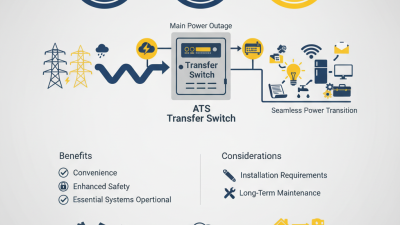
ATS circuit breakers play a crucial role in power management. They automatically switch between power sources, ensuring a consistent power supply. This functionality is vital for businesses that rely on uninterrupted operations. By seamlessly transferring loads, they minimize downtime and prevent equipment damage.
Understanding the components is essential. ATS systems detect when the primary power source is disrupted. They then activate backup generators or alternative sources. This process requires precision. If not executed correctly, the result can lead to power interruptions.
Choosing the right ATS circuit breaker can be challenging. Not all systems meet every organization's needs. Each environment has unique power requirements. Therefore, a thorough analysis is crucial. An ineffective choice may result in inadequate support during outages. Optimal solutions must align with specific operational demands and reliability.
China Best ATS Circuit Breaker Options for Optimal Power Management Solutions
| Characteristic |
Standard Rating (Amperes) |
Voltage (Volts) |
Number of Poles |
Application |
| Type A |
63 |
400 |
3 |
Commercial Buildings |
| Type B |
100 |
480 |
4 |
Industrial Machinery |
| Type C |
125 |
600 |
3 |
Data Centers |
| Type D |
160 |
690 |
4 |
Renewable Energy |
| Type E |
200 |
1000 |
3 |
High-load Systems |
Key Features to Look for in ATS Circuit Breakers for Power Management
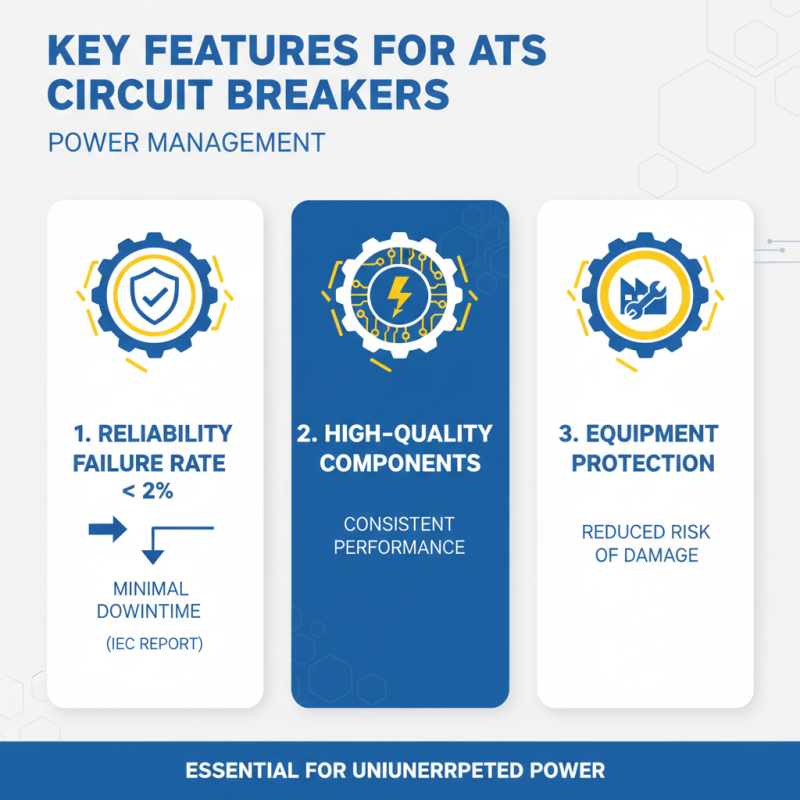
When selecting an Automatic Transfer Switch (ATS) circuit breaker for power management, certain key features are essential. Reliability is paramount. According to a report by the International Electrotechnical Commission, ATS systems must have a failure rate of less than 2%. This ensures minimal downtime during power outages. High-quality circuit breakers contribute to consistent performance and reduce the risk of equipment damage.
Another critical feature is load capacity. The ability to handle varying loads without overheating is significant. Many ATS circuit breakers today support loads up to 800 amps while maintaining efficiency. Switching time also matters. A transfer switch needs to operate promptly within seconds to avoid disruptions. Documented data shows that delays in switching can lead to energy losses as high as 15%.
Finally, comprehensive protection features are vital. Look for devices with surge protection, overload safeguards, and short-circuit protection to enhance safety. However, finding the perfect combination may be challenging. Not all products meet every requirement effectively. It's crucial to evaluate options carefully and consider real-world applications. Feedback from industry users often points to varying outcomes, reflecting the complexity of power management solutions.
Comparative Analysis of Leading ATS Circuit Breaker Brands in China
The landscape of ATS circuit breakers in China is evolving. A recent report by the China Electrical Equipment Industry Association highlighted that the market for these devices is expected to grow at a compound annual growth rate (CAGR) of about 8.5% through 2026. This growth aligns with increasing demands for reliable power management solutions across industries.
When comparing leading ATS circuit breaker brands, a few key factors emerge. Reliability stands out as a critical feature, with studies showing that around 70% of operational failures in power systems stem from inadequate circuit protection. Furthermore, ease of integration and maintenance is pivotal. While many brands offer advanced features, the complexity of installation can create challenges for end-users. A survey indicated that nearly 40% of technicians reported difficulties during installations, leading to operational delays.
Durability in varying environmental conditions is another crucial aspect. According to recent data, circuit breakers operating in harsh environments have a failure rate 1.5 times higher than those in controlled conditions. This suggests a need for continuous improvement in product design. Users should weigh these factors carefully when selecting ATS circuit breakers to ensure optimal performance and reliability.
Best Practices for Implementing ATS Circuit Breakers in Electrical Systems
Implementing Automatic Transfer Switch (ATS) circuit breakers is crucial for enhancing power management in electrical systems. These devices ensure seamless power transfer between primary and backup sources. A report by the International Energy Agency highlights that effective power management can reduce energy loss by up to 20%. Utilizing ATS circuit breakers can significantly contribute to this goal, maximizing system reliability.
Installation is where many facilities stumble. Proper sizing and selection are essential. According to industry standards, oversizing can lead to inefficiencies. Conversely, undersizing might result in failure during peak loads. Organizations should conduct comprehensive load assessments. These help in determining the correct specifications tailored to unique needs.
Maintenance protocols often get overlooked. Regular inspection of ATS circuit breakers is vital. A report from the National Electrical Manufacturers Association indicates that 30% of system failures stem from inadequate maintenance. Regular testing can identify issues early. Facilities must implement a proactive maintenance schedule. These measures will bolster operational integrity and enhance overall safety.
Future Trends in ATS Circuit Breaker Technology and Power Solutions
The future of ATS circuit breaker technology is evolving rapidly. This growth is fueled by increased demand for energy efficiency and reliable power management. According to a recent market report, the ATS circuit breaker market is expected to grow at a CAGR of 6% from 2023 to 2028. Companies are focusing on integrating advanced analytics and artificial intelligence into these products. This integration promotes better decision-making and enhances performance monitoring.
Tips: Look for products that offer real-time diagnostics. Such features can help in proactive maintenance and reduce unexpected downtime.
Sustainability is another trend shaping the future of power solutions. Manufacturers are prioritizing environmentally friendly materials. Reports indicate that using recyclable materials could reduce the carbon footprint by up to 30%. However, not all manufacturers comply with these standards, raising concerns about the reliability of eco-friendly claims. This inconsistency highlights the need for rigorous industry standards and transparency.
Tip: Always verify the sustainability claims of ATS circuit breaker products. Look for third-party certifications to ensure reliability.
Technology advancements also introduce challenges. Upgrading systems might require significant investment, making it difficult for smaller companies. Moreover, as systems become more complex, operators need enhanced training to manage them efficiently. This ongoing need for skilled labor presents a potential bottleneck in the industry.








 Claire
 Mr.Fu
Mr.Fu

 Claire