Why You Should Consider an ATS Transfer Switch for Your Home or Business?
In today's increasingly unpredictable world, ensuring a reliable power source is paramount for both homes and businesses. John Smith, an expert in electrical engineering, once stated, "An ATS transfer switch can be a game-changer for power management." The ATS transfer switch offers seamless power transition during outages. This device can automatically switch from the main power supply to a backup generator, ensuring you stay connected.
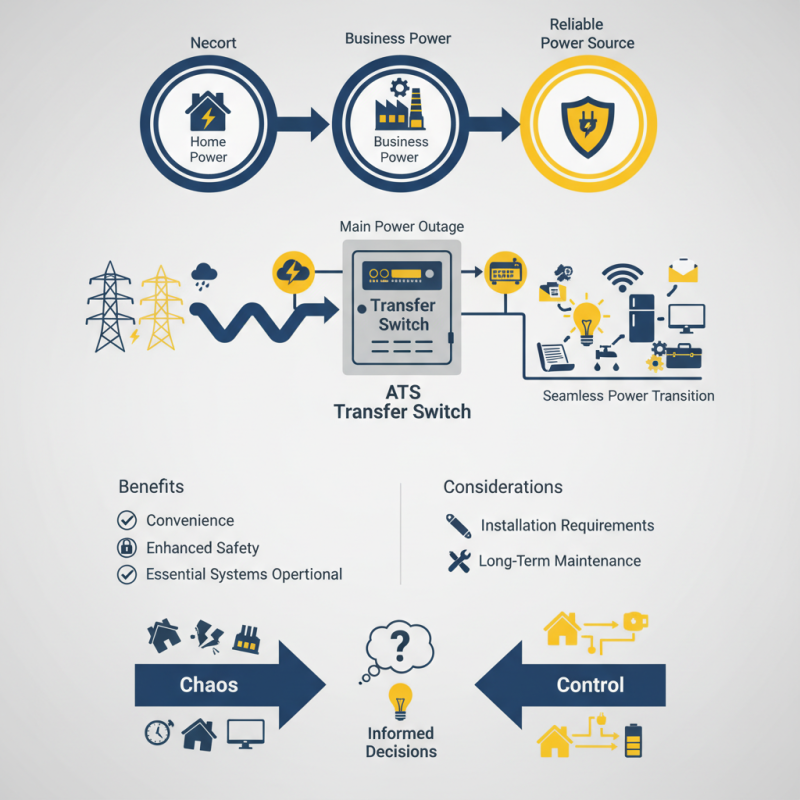
Many underestimate the significance of an ATS transfer switch. It not only provides convenience but also enhances safety. Imagine a scenario where a storm knocks out power in your area. With an ATS transfer switch in place, your essential systems remain operational. Yet, some may overlook the installation requirements or the long-term maintenance involved. These factors can pose challenges that should be carefully considered.
Considering an ATS transfer switch may change how you view power reliability. Take the time to evaluate your needs and assess the potential impact of this technology. It could mean the difference between chaos and control during power interruptions. Reflecting on these aspects can lead to more informed decisions about your power management solutions.
Understanding ATS Transfer Switches and Their Functionality
An ATS transfer switch ensures seamless electricity supply during power outages. These devices automatically switch between the main power grid and a backup generator. They help maintain essential services in homes and businesses without manual intervention. Imagine the relief of not having to scramble for flashlights during a blackout. Instead, the lights stay on, and operations continue smoothly.
Understanding the functionality of ATS transfer switches reveals their crucial role. When the power goes out, the ATS senses the disruption. It disconnects the home or business from the grid and engages the generator. After the power is restored, the switch reverses the process. It’s fast and reliable, reducing downtime significantly.
However, not every situation is perfect. Installation can be complex. It requires professional expertise to ensure safety and compliance with regulations. Sometimes, maintenance is overlooked, leading to potential failures. Users must regularly check their systems for optimal performance. With a bit of diligence, an ATS transfer switch can be a worthwhile investment.
Key Benefits of Installing an ATS Transfer Switch at Your Location
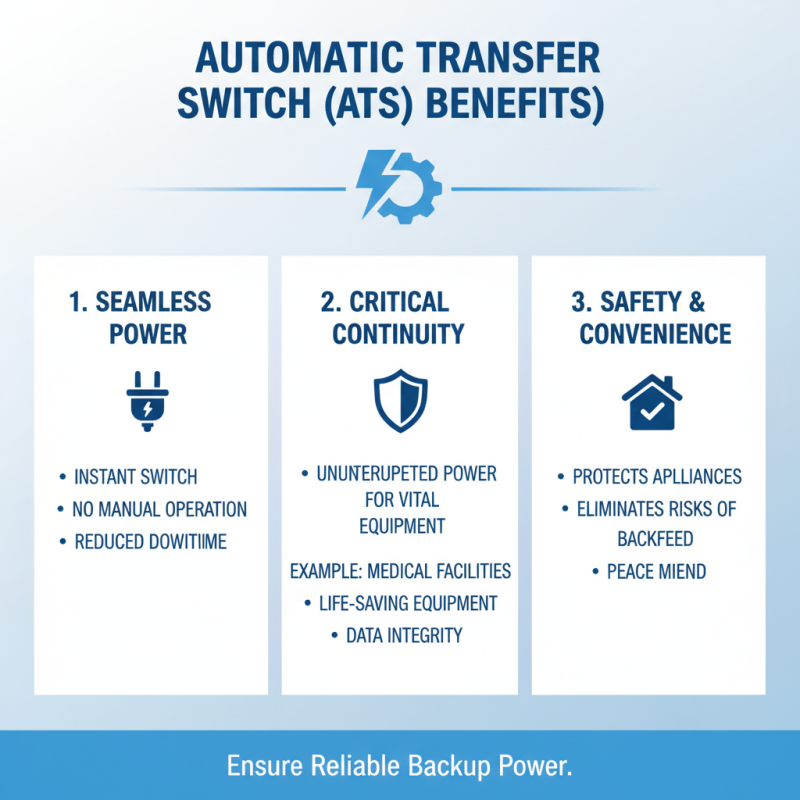
Installing an Automatic Transfer Switch (ATS) offers numerous benefits for homes and businesses. One significant advantage is the seamless switch to backup power during an outage. This eliminates the need for manual intervention, reducing downtime. For instance, in a medical facility, consistent power is critical. An ATS ensures that vital equipment remains operational, potentially saving lives.
Moreover, ATS systems enhance safety. They prevent back-feeding, a dangerous condition that can harm utility workers. With an ATS, the risk of accidents decreases significantly. Additionally, many ATS models include features for monitoring power levels. This functionality can alert you to any irregularities, helping to prevent larger issues.
Some may find the installation cost daunting. However, consider the potential losses from unplanned outages. Small businesses might experience revenue loss due to interrupted services. Reflecting on these factors can lead to a realization: the benefits of an ATS often outweigh the initial investment. It’s worth pondering the long-term value it brings.
Comparing ATS Transfer Switches to Other Power Transfer Solutions
When considering power transfer solutions for homes or businesses, ATS transfer switches stand out. They offer seamless switching between utility power and generators. This ensures your operations continue without interruption during outages. In contrast, manual transfer switches require user intervention, which can lead to delays in restoring power.
Using an ATS can be lifesaving. These switches automatically detect power loss and engage the generator. This speed means your business can operate smoothly, even in a crisis. While they may seem more complex, the peace of mind they provide is invaluable.
Tips: Regular maintenance is key for optimal performance. Check connections and circuitry regularly. Consider training staff on emergency procedures. Familiarizing them with the ATS system can shorten downtime during an outage. Reflect on your specific power needs to choose the right solution. Every environment is unique, and so are its challenges.
Installation Considerations for ATS Transfer Switch in Homes and Businesses
When considering an ATS transfer switch for your home or business, installation is a key factor. A well-planned installation can enhance safety and efficiency. According to a 2022 industry report, facilities with properly installed ATS systems reduce downtime by up to 80%. This statistic underscores the importance of a professional installation process.
Choosing the right location for the ATS is crucial. It should be easily accessible yet protected from potential hazards. Misplaced installations can lead to failures during power outages, which can be disastrous. Poor planning can result in costly adjustments later. While some may opt for DIY installations, this could lead to compliance issues. Faulty installations might fail to meet local electrical codes, potentially incurring fines or unsafe conditions.
Moreover, consider the size of the transfer switch. Oversized or undersized switches can affect performance. A 2023 report highlights that 40% of businesses experience inefficiencies due to incorrect switch sizes. Investing time to assess your specific needs is essential. Consult with professionals who can provide tailored guidance based on your unique requirements. Taking small steps towards a thoughtful installation can greatly enhance the reliability of your power supply.
ATS Transfer Switch Installation Considerations
Maintaining Your ATS Transfer Switch for Optimal Performance
Maintaining your ATS transfer switch is crucial for ensuring reliable operation. Regular check-ups can prevent unexpected failures. Inspect the switch at least twice a year. Look for signs of wear or damage. Dust and dirt can affect performance. A clean switch operates more efficiently.
Conduct a thorough inspection of connections. Loose wires may lead to outages. Tighten any loose screws or bolt connections. Check the transfer switch's status lights. They indicate whether the switch is functioning correctly. If a light is off, it may signal a problem. Document any irregularities you observe.
You should also test the transfer switch regularly. This process can identify issues before they escalate. Not every test will go smoothly. Sometimes you might not know what went wrong. Understanding the procedure can help. Consider seeking a professional for complex problems. Mistakes can happen when you try to fix everything yourself.
Why You Should Consider an ATS Transfer Switch for Your Home or Business? - Maintaining Your ATS Transfer Switch for Optimal Performance
| Feature |
Benefits |
Maintenance Tips |
| Automatic Switching |
Ensures power continuity during outages. |
Regularly test the system monthly. |
| Safety Features |
Protects devices from damage due to power loss. |
Inspect and replace damaged cables as needed. |
| User-Friendly |
Easy operation for all users. |
Keep the manual handy for standard operation procedures. |
| Cost-Effective |
Reduces downtime which can lead to cost savings. |
Schedule annual maintenance checks. |
| Compatibility |
Works with various generator brands. |
Ensure compatibility with your current systems. |










 Claire
 Mr.Fu
Mr.Fu

 Claire