2026 Best Molded Breaker Options for Your Home and Business Needs?
In today's fast-paced world, securing your electrical system is crucial. Molded breakers are essential components in both home and commercial settings. They protect against overloads and short circuits. According to industry research by the Electrical Safety Foundation International (ESFI), improper electrical protection results in over 53,000 residential fires each year. This statistic highlights the importance of effective molded breakers.
Renowned electrical engineer, Dr. John Anderson, states, "Choosing the right molded breaker can save lives and property." His insight reflects the significance of selecting suitable options for your unique needs. Molded breakers come in various types, each designed to meet specific applications.
Investing in high-quality molded breakers can enhance safety and efficiency. However, many users frequently overlook vital specifications. Awareness of your system's requirements can prevent costly mistakes. Understanding this intricate subject is essential for proper installation and maintenance. Ensure you evaluate different options carefully. This diligence could have a profound impact on safety and reliability.

Factors to Consider When Choosing Molded Breakers
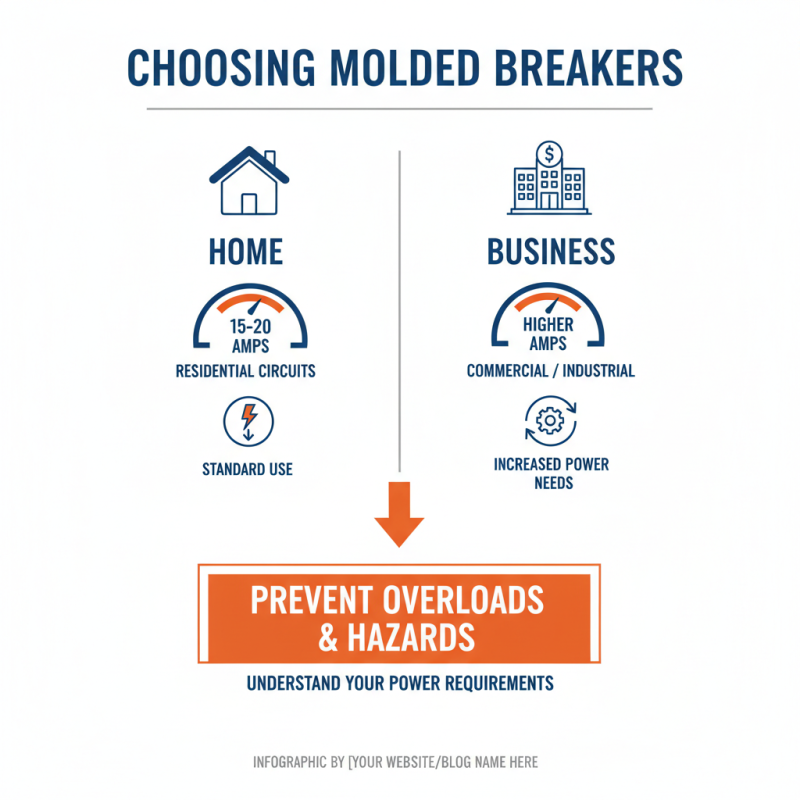
When choosing molded breakers for your home or business, several key factors come into play. The amperage rating is crucial. Most residential circuits operate on 15 to 20 amps. For businesses, higher ratings may be necessary. Understanding your specific power requirements can prevent overloads and potential hazards.
Safety features are another important consideration. Look for breakers that comply with current safety standards. Studies show that circuit breakers with arc-fault protection reduce the risk of electrical fires by up to 50%. This can significantly enhance safety in high-risk areas like kitchens and living rooms.
Tips: Make sure to assess the physical space of your panel. If your panel is small, you may struggle with fitting larger breakers. Take measurements before making a purchase.
Another point to reflect on is the installation process. Improperly installed breakers can lead to malfunctions. A shocking 30% of electrical issues stem from faulty installations. Therefore, consider enlisting a professional to ensure everything is done correctly. This might seem like an extra step, but it could save you time and money in the long run.
Types of Molded Breakers Suitable for Home Use
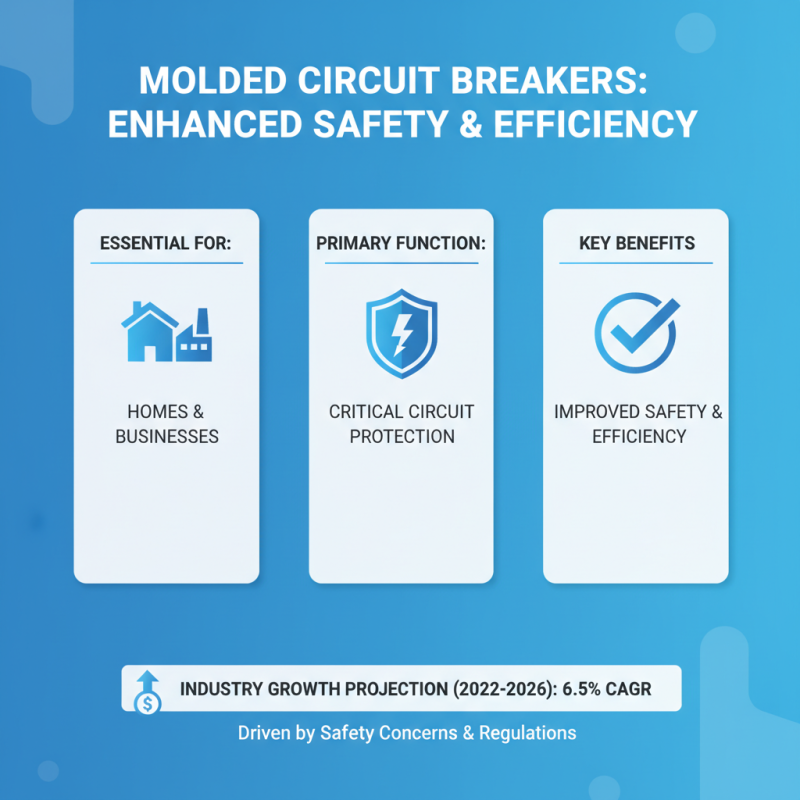
Molded breakers are essential for both homes and businesses. They provide critical protection for electrical circuits. Choosing the right type can enhance safety and efficiency. According to a recent market report, the molded circuit breaker industry is projected to grow at a CAGR of 6.5% through 2026. This growth reflects increasing electrical safety concerns and regulatory drives.
For home use, standard molded breakers come in various styles and capacities. These breakers are usually rated between 15A and 60A, making them suitable for most household circuits. Consider dual function breakers as well. They can handle both overload and short circuits, offering enhanced safety. Installation isn’t always straightforward. Homes with outdated wiring might need upgrades to accommodate new breakers.
Some users overlook the importance of regular maintenance. Breakers can wear down or become less effective over time. Routine checks can prevent unexpected outages and potential fire hazards. The National Electrical Code recommends examining breakers annually. This recommendation is often ignored, leading to unreliable electrical systems. Thus, selecting the right molded breaker is vital, and continuous learning about maintenance is equally important.
Types of Molded Breakers Suitable for Business Use
When choosing molded circuit breakers for business use, consider the specific needs of your industry. Breakers come in various types, including standard and ground fault circuit interrupters (GFCIs). Standard breakers protect against overloads. GFCIs, on the other hand, prevent electrical shock in wet areas. Each type serves a unique purpose.
Evaluate the current load your equipment requires. If your business uses heavy machinery, higher capacity breakers are necessary. Installation may require professional help. Not all businesses have the same electrical requirements. Some may need more protection than others. Periodic assessments are vital to ensure safety and compliance.
It's essential to reflect on aging electrical systems. Older setups may not support newer breakers. This could lead to unexpected failures. Regular inspections can help identify potential issues. Identifying the right breaker type impacts both safety and performance. Your choice now affects future operations.
Top Brands and Models of Molded Breakers in 2026
Molded circuit breakers are essential for protecting homes and businesses. In 2026, several brands are leading the market. These molded breakers come with unique features suited for different applications. They are designed to handle various loads and environments, making them versatile.
Data from industry reports indicates a significant rise in demand. The market for molded circuit breakers is projected to grow by over 6% annually. This growth is driven by increasing construction activities and the need for electrical safety. Features like adjustable trip settings and advanced surge protection are now standard in many modern models.
Tips: When selecting a molded breaker, consider the total load of your electrical appliances. Ensure that the breaker’s rating meets or exceeds this load. Also, look for models with clear indicators for easier monitoring. Not all breakers are created equal; some may not perform well in extreme conditions. Always research user reviews to avoid unexpected issues with reliability.
2026 Best Molded Breaker Options for Your Home and Business Needs
| Model |
Amperage |
Voltage |
Type |
Price ($) |
| ABC123 |
15A |
120V |
Single Pole |
12.99 |
| XYZ456 |
20A |
120/240V |
Double Pole |
15.50 |
| LMN789 |
30A |
240V |
Double Pole |
25.75 |
| QRS321 |
40A |
240V |
Double Pole |
35.30 |
| STU654 |
60A |
240V |
Double Pole |
45.99 |
Installation and Maintenance Tips for Molded Breakers
Molded circuit breakers are essential for electrical safety in homes and businesses. Installation and maintenance are key factors that can significantly impact their performance and reliability. According to the National Electrical Manufacturers Association (NEMA), proper installation can reduce the risk of electrical fires by up to 30%. Understanding installation protocols can protect your property.
When installing molded breakers, ensure correct sizing for your load requirements. A breaker that is too small may trip frequently, while an oversized breaker may not protect adequately. Use a torque wrench to secure connections, as loose connections can lead to overheating. Regularly inspect these connections for signs of wear or corrosion. Remember, the breaker needs a clean environment. Dust and moisture can hinder its operations.
For maintenance, replace breakers that show signs of wear, such as discoloration or cracking. Periodic testing is vital; trip your breakers monthly to ensure they function properly. Not everyone does this, but it's crucial for safety. Keep a maintenance log to track when each breaker was last checked. This habit can uncover potential issues before they become serious problems. Regular upkeep may seem tedious, but it pays off.








 Claire
 Mr.Fu
Mr.Fu

 Claire